Has your once the most vibrant brand in the market now turned to just another option in the crowd of brands?
If yes, that’s okay. It’s the reality of all brands today.
To put this in perspective, a study shows 75% of the most iconic brands are losing their distinct voice.
Here’s the twist: this isn’t a threat. It’s an opportunity. Engage a creative branding agency and rebrand your DTC company.
Can’t quite make up your mind whether or not your brand needs a revamp? In this blog, we list 15 signs that clearly point to a branding problem and that it’s time for you to rebrand.
15 signs your DTC brand needs a rebrand
From an unclear brand story to outdated design to changing audiences, here are 10 signs your DTC brand might need a rebrand or it’ll fade into oblivion.
1. Your brand offers transactions, not value
According to the World Economic Forum, 70% of consumers buy from brands that share their values or personal beliefs. That’s because today’s consumers are spoilt for choice and prefer brands that meaningfully belong in their lives, not just transactionally.
An audit by Ogilvy reveals three challenges or signs:
- Emotional disconnect: Is your brand failing to build deeper connections required in the competitive DTC market?
- Purpose-washing pitfall: Are you able to move beyond “purpose-washing” to create a sense of shared identity?
- Outdated loyalty mechanics: Does your brand still have loyalty programs built a decade ago?
And how does branding create brand value?
A meaningful branding process helps brands align with consumers’ values, build communities that connect like-minded individuals, genuinely improves the consumer’s life, and reflects their lifestyle. In addition, brands that are consistent and intentional, and are able to measure real impact and truly create value for its customers.
2. Your brand story doesn’t say anything
What happens when we land on a brand’s home page? We try to get a sense of what the brand is selling and the type of products and services. And here’s a fun fact: our brain forms perceptions in as little as 13 milliseconds, proves a study by MIT.
Do people land on your website and keep skimming through pages to understand what it is you sell or offer, and what your brand is all about? Is your home page just your logo and some attractive images or does it tell visitors who you are, what you stand for, where you come from, and where you’re going?
If there’s no clear introduction, vague content, inconsistent tone, or boring text that reads like you’re a brand stuck in the early 21st century, your storytelling is scattered. If your brand story is unclear, it’s time to look for a branding agency.
3. Your positioning is unclear
If your answer to “what does your brand do” is not one but five different things, your positioning is split. Brand positioning expert, Will Barron at Salesman.org says, “You only get the opportunity to position your brand when you’re doing something remarkable. Anything else, and it’s just a comparison.”
In other words, brand positioning allows you to differentiate your brand from competitors. This helps build brand awareness, communicate value, and justify pricing. Positioning also helps brands appeal to specific audiences.
Here are some factors for strong brand positioning in 2026:
- Authenticity over AI-generated fake promises
- Show real proof, cut generic buzzwords
- Personalize by solving real customer problems
- Co-create culture and products
- Hyper-specific and distinct positioning
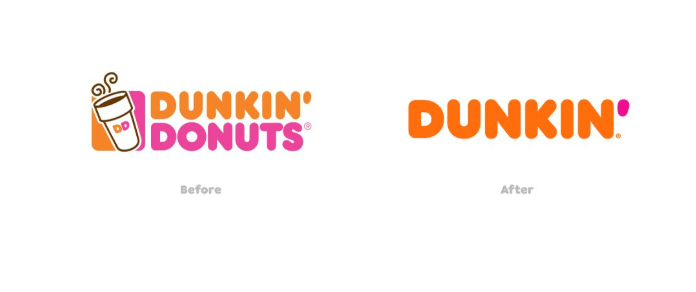
For example, in 2019, Dunkin Donuts rebranded to Dunkin. Why? Because the word ‘Donuts’ was somewhat misleading and limiting, given that 60% of the company’s sales came from beverages.
4. Your products have evolved but brand hasn’t
A common phenomenon in the DTC business space is products evolving but brands remaining the same. And when this happens, disconnect occurs. Customers feel confused.
For instance, your products may look contemporary, but the website and messaging is old. This can leave customers confused. And because of this mismatch, you might not be able to fetch premium prices.
A rebrand can help you:
- Revise your brand messaging to convey your current capabilities
- Modernize your website design to match your products
- Reposition the value customers gain from your brand
- Create a cohesive experience
5. Your brand lacks consistency
When you open your DTC brand website, Instagram page, Facebook page, and any other platform, do you see the same messaging, tone, voice, and visual consistency or is it all different? Does each of your platforms align with your brand personality? If not, that’s a branding problem.
Consistency helps:
- Build brand recognition
- Establish trust and credibility
- Increase customer loyalty
- All elements align cohesively across touchpoints
Brand consistency comes from various aspects, such as visual identity (logo, design, website); messaging and tone (marketing messages, adverts, and other communications); and customer experience.
6. Your packaging doesn’t create a memorable experience
In 2015, Frooti, the mango drink brand, decided to change its packaging design. From the rectangular tetra pack with a straw hole that was marketed as something that’s part of school lunchboxes, the rebranding makes the package a sleek and minimalist bottle. The new packaging appealed more to the young urban crowd.
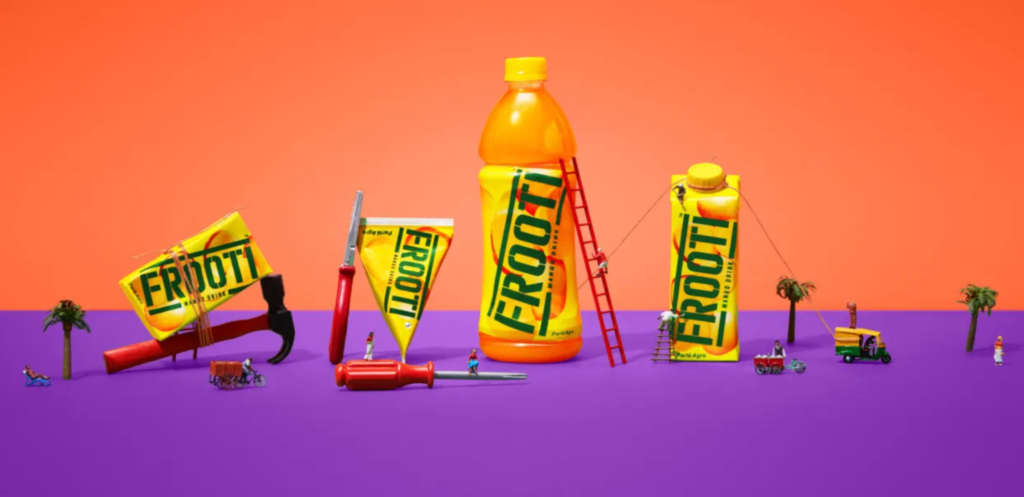
Social media has changed the way we experience products and brands. Today, buying a product is also about recording unboxing videos and creating Instagram stories.
What is more, modern, minimal packaging design also increases recognizability when on the supermarket shelves. Moreover, a clean design makes it easy for consumers to read and understand what the product is within seconds.
A redesign of your product packaging can enhance brand credibility, increase the premium perception of your products, leading to repeat purchases.
7. Customers remember products, but not your brand
Do your customers talk about your product only, forgetting your brand? If this is common, there’s a problem. When this happens, it could indicate that the product serves well, but the brand lacks something or many things. For instance, your brand might be lacking a distinct personality or emotional connection or identity.
Hiring a branding agency to revive your brand can help you reinforce a specific value, retell your story in a way that builds emotional connection, and bring consistency with brand colors, tone, and visual elements.
While products are the most important element for any brand, relying too heavily only on the product alone can have a negative impact on your brand recall and recognition.
8. Your brand doesn’t match its audience
Just like people, brands also change over time. And before they know it, they stop aligning with their ideal customer. Maybe the brand didn’t grow with its audience. Maybe the brand grew but its story remained the same. Maybe it lost its positioning or it’s trying to connect to a new audience.
When there’s a mismatch between a brand and its audience, sales cycles become longer, leads become weaker, and churn becomes higher.
So, how to know if there’s a mismatch between your brand and your audience?
If you hear people saying, “Didn’t know that’s what this brand does”, or “Don’t think you’ll have what I’m looking for”, it’s a brand-audience mismatch problem.
This is where rebranding can help realign your positioning with your target audience.
For example, if you want to stay relevant for Gen Z and then Gen Alpha, your brand has to stay on top of demographic shifts and redefine your brand to match the new audience.
9. You’re expanding into new markets
Entering new markets with old branding can cause cultural disconnect, audience-market mismatch, or confusion.
For instance, your value proposition that works for one region could be misunderstood in the new location. Or, some colors, symbols, and design elements may carry negative cultural connotations in a new region.
Rebranding before entering new markets can help:
- Create a custom look by changing colors, symbols, and logos
- Make changes that align with local cultural nuances
- Create a narrative that talks about what makes your product special in the market
- Remove old ideas, include fresh ones
10. Growth has plateaued even though everything improved
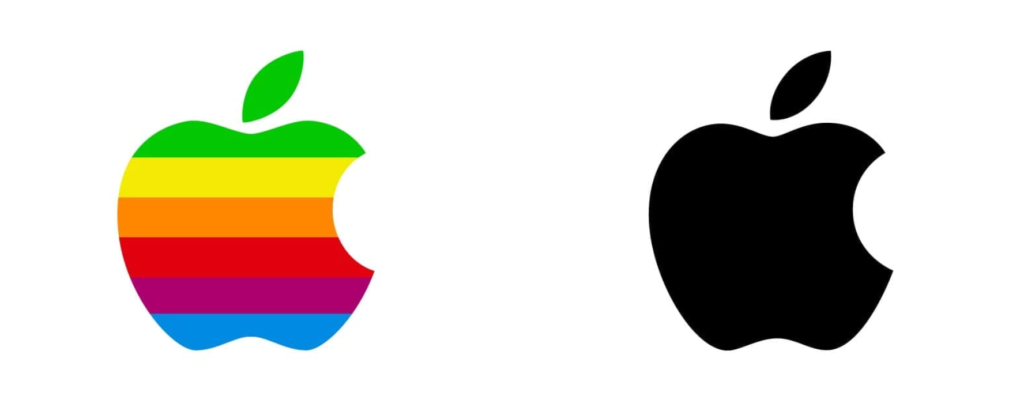
It’s hard not to talk about Apple when talking about branding. The company experienced breakout success in the 1970s and 80s with its computers. However, in the mid-80’s, when founder Steve Jobs was forced out of the company, the brand struggled even though everything else was the same. Jobs came back in 1997, led a rebrand to its current minimalistic identity, and the brand got its spark back.
At times, everything else may be great—top quality products, impeccable marketing, superb packaging, and excellent shipping experience—but your brand might still struggle. Branding becomes a limitation, and you definitely need a rebranding.
11. Outdated design, look and feel
Are you using graphics and templates that look dated? Or does your brand look fresh and contemporary? And that goes for everything – from the logo to the creatives on your social media pages to the website.
Your brand’s colors, font, designs, and visual elements lend it identity. If there’s a mismatch between the design on different platforms or if the design looks like it’s from two decades ago, it’s time for you to rebrand.
Your branding agency will help you with:
- Moodboards
- Logo
- Brand color palette
- Typography and fonts
- Templates for creatives
- Messaging
- Illustrations
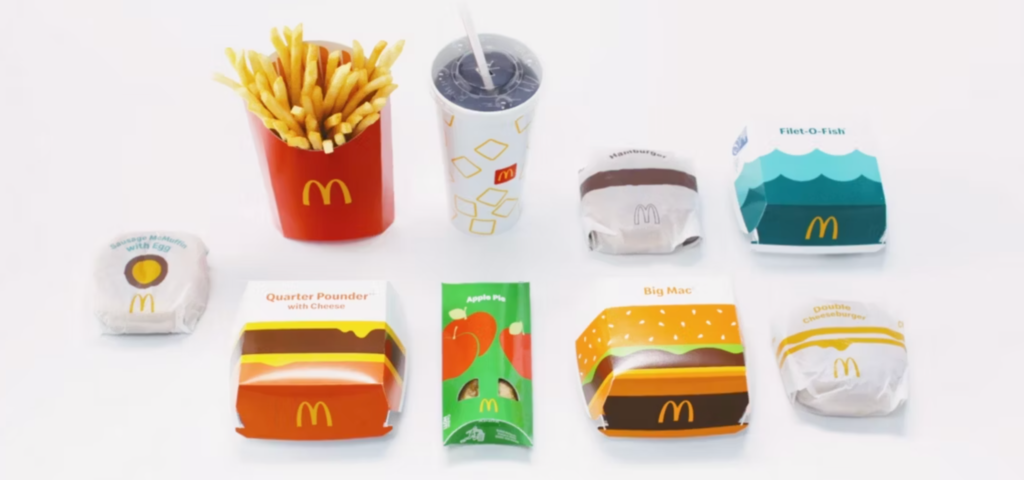
For example, in 2022, McDonalds rebranded with minimal packaging design to get done with its traditional image.
12. Your brand colors are random
Are your brand’s colors just colors that you like or are they really relevant to your brand? Do you have a convincing answer for why the specific colors are your brand colors? If you don’t, your brand color palette needs a change. Because brand colors are meant to invoke desired emotions.
Colors play a key role in shaping brand perception, personality, and recollect value. It is one of the fastest ways for your brand to become memorable and recognizable in the market. And since we live in a time when visual content gets consumed first, your brand colors are important.
13. Your brand is not optimized for AI
Branding is not just about visual elements, such as the logo, colors, and fonts. It also affects how search engines and AI systems perceive your brand and cite it in searches and queries.
Brands that have a clear identity, consistent messaging, and a recognizable presence across platforms, online and AI search visibility increases. For example, Google prioritizes brands that users recognize and engage with. AI systems cite information from trusted and consistent sources.
So, if your brand identity is inconsistent, information outdated, and messaging confusing, you definitely need a rebrand to improve search visibility across SEO platforms and AI systems.
14. You’re struggling to raise prices
There’s one thing many brands generally do not associate with pricing – pricing of products and services.
Do you think you’re struggling to raise prices? If yes, a rebrand could be the solution.
If, in spite of rising costs of materials and marketing, you are not able to increase the price of your products and services, a rebrand can help change the fixed perception of customers.
Here’s the thing: customers don’t usually trust that an outdated or weak brand can deliver value and hence may not be willing to pay more.
However, a fresh look, a refined identity, a new positioning has a psychological effect. It gives you an opportunity to redefine your value, and rightfully adjust product and service pricing. And having the power to increase pricing can help with business growth.
15. You’re failing to attract top talent
Top talent wants to work with the best brands. If you’re finding it hard to attract top-tier applicants, it might be because your employer brand is not up to the mark. It’s time to rebrand.
When brands carry a strong employer tag, they attract the best talent. Thus, these brands are able to hire people that align with the brand’s values and aspirations.
Hence, focusing on your employer brand when rebranding can help attract candidates that positively contribute to your company.
A negative brand perception is not only built by customers. Over time, past employers, too, can create a negative perception of your brand that may be impacting your future potential hires. A rebrand can help change this negative employer reputation.
Summing up
Rebranding is more than just changing your website content, tweaking your brand logo, or changing the color palette. Rebranding can involve changing your messaging to positioning in the market to adapting to a completely new generation of consumers.
At The Brand Strategy Lab, we’ve spent a decade helping brands build identities, positioning, maintaining consistently, and ensuring the right messaging.
If you’re looking for a rebrand, reach out to our experts today.