
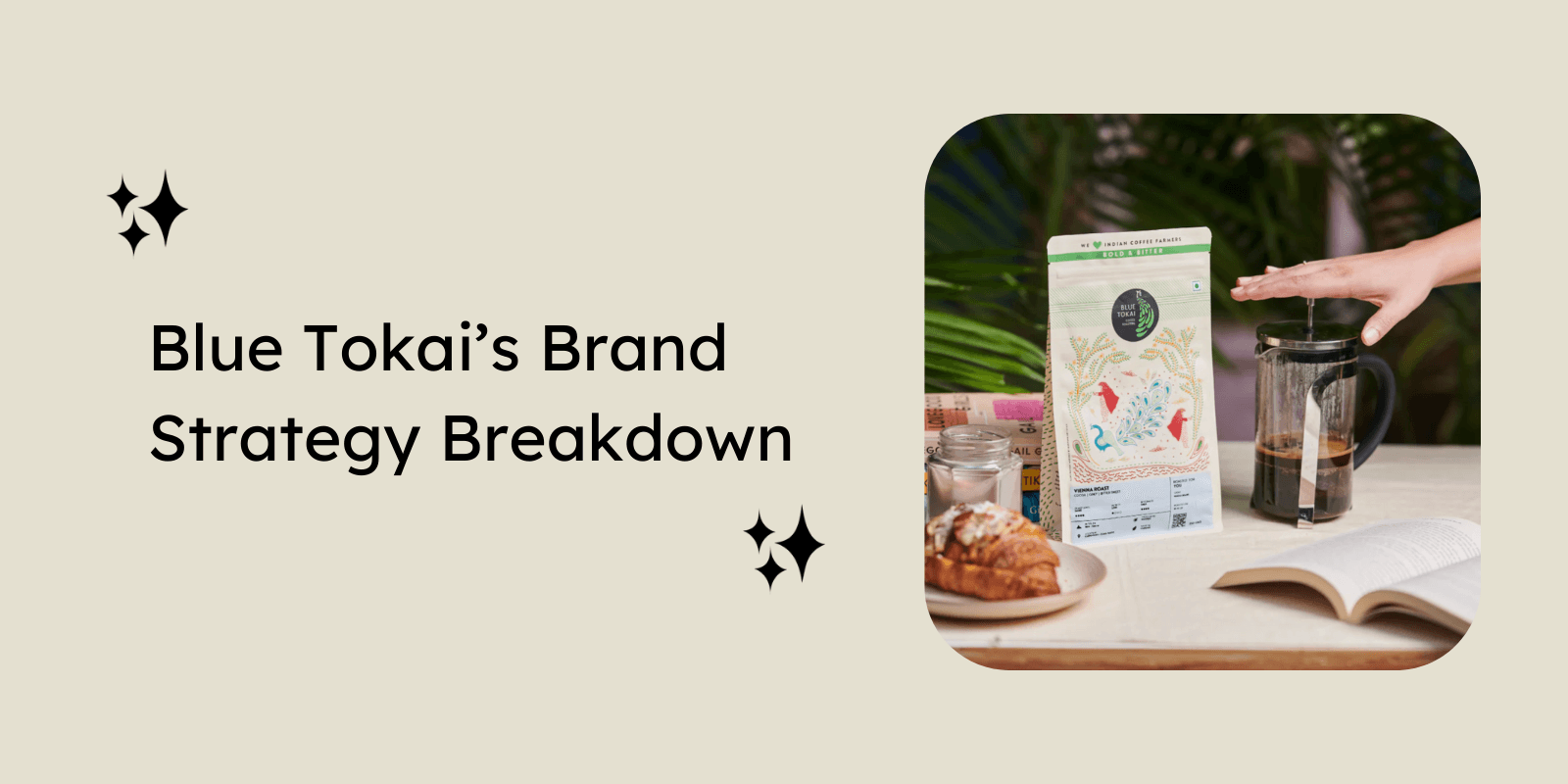
The Indian coffee culture is at its peak. And it’s only growing. With increasing competition, it is essential for brands to stand out meaningfully.
Merely having good coffee is not enough. You need to build a great brand identity, too. One that shouts authentic. One that consumers can relate to.
And that’s what Blue Tokai’s brand strategy is all about.
In this blog, we explore the many aspects that make Blue Tokai the brand it is, and what aspiring coffee brands can learn from it.
About Blue Tokai
Blue Tokai is an Indian craft coffee brand that was founded by Matt Chitharanjan, Namrata Asthana, and Shivam Shahi. The brand began with a simple frustration that despite India being the fifth-largest coffee growing country in the world, it was so difficult to find freshly roasted and high-quality coffee in North India.
The brand that started with an investment of a few lakhs is now worth around INR 1400 crores, and growing.
Blue Tokai brand strategy breakdown
Here are some of the key aspects of Blue Tokai and some lessons to learn for coffee brands:
What’s behind the brand name?
The name Blue Tokai is not random. It has cultural and historical significance. ‘Tokai’ is a Malabari word meaning “the plume of the peacock”, India’s national bird. The Malabar region is where the British colonists first spotted peacocks and cultivated coffee. And Blue refers to the bright blue of peacock feathers.
The name of the brand positions it as authentically Indian. Tokai is an unheard word, which creates curiosity amongst customers. The name stands out in the market, which is dominated by generic and western brand names.
What’s behind the Blue Tokai logo?
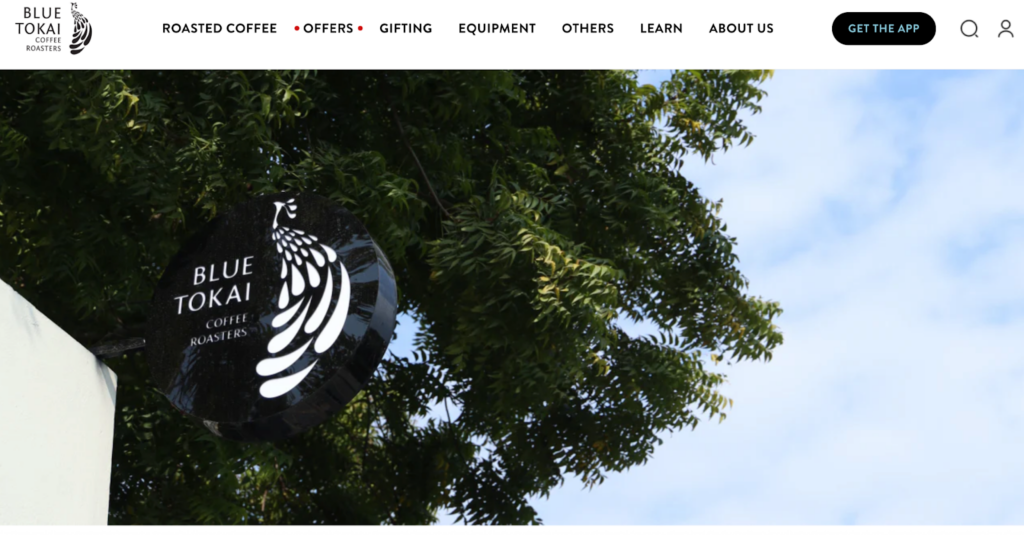
Blue Tokai’s logo is made of a bright blue peacock motif enclosed in a circle. The circular logo displays clean elements, neat font, and has a bold appeal. When placed on any packaging of the brand, the large logo creates a strong brand recall.
The peacock motif has a reference to India and the national bird, where a traditional symbol meets contemporary design. The brand uses the logo with color variations with blue, black, and white. The brand uses different colors for different flavors, creating a color-coding system.
Blue Tokai brand colors
Blue Tokai’s brand color palette includes blue, black, white, green, and orange. Blue is the main color, while its secondary color palette includes light, subtle, and earthy tones used differently between its products and outlets.
For instance, the brand uses green for bold and bitter coffees, orange for light roasts, and other accent colors for different roasts and origins. The brand also uses blue cutlery in its cafes, a contrast to warm and muted tones used for other things.
Typography and fonts
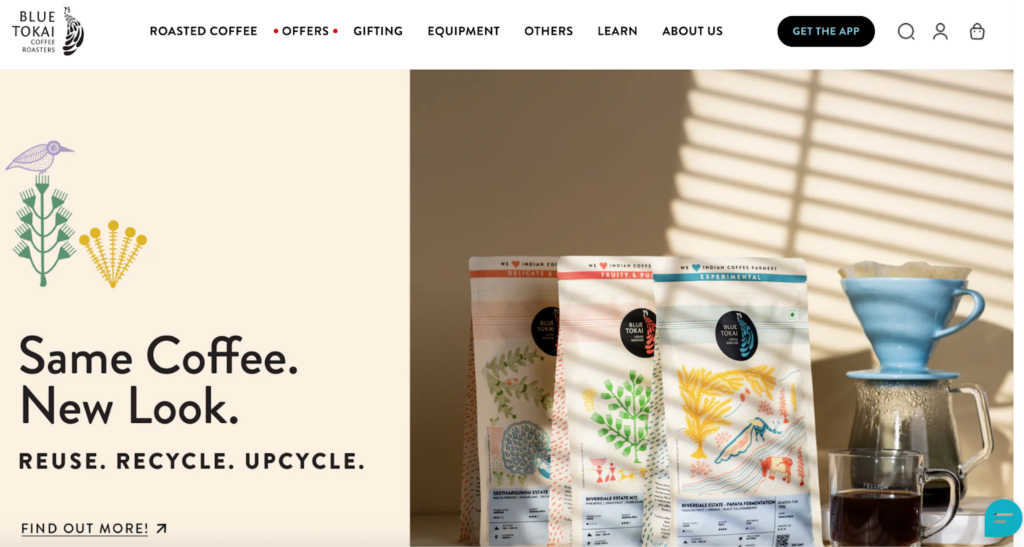
The brand uses clean, modern, and appealing fonts. Using clean fonts lends a modern and accessible appeal. It also enhances readability. The simplicity and minimalism of the fonts keeps it easy on the reader, and spacing improves breathability and premium feel.
The fonts enhance accessibility, making their coffee feel approachable; adds a modern touch, positioning the brand as contemporary; clarity makes it easy to absorb information; and the overall font choice gives a premium feel.
Tone of voice
Blue Tokai’s tagline, ‘Proudly Indian. Honestly Crafted.’ captures its brand voice. It is educational and approachable. The brand maintains transparency and authenticity. It celebrates Indian coffee culture without being elitist or arrogant.
The brand takes a community approach in its messaging by using words such as ‘we’ and ‘our’, enhancing approachability and customer participation, creating a sense of belonging. The tone makes their specialty coffee feel inclusive rather than intimidating, which is essential for growth in India’s traditional tea-drinking market.
Competitive edge: What makes Blue Tokai different?
Blue Tokai has many competitors in the market, such as Third Wave Coffee, Sleepy Owl, rage Coffee, SLAY Coffee, and Starbucks and Costa Coffee. But the brand stands out in many aspects. Here are some aspects that make the brand different from the others:
1. Farm-to-cup storytelling
While its competitors focus on selling coffee, Blue Tokai focuses on building a connection to Indian coffee culture. Each of its coffee packages features names of estates and farmer stories. The Indian art and craft designs, such as Gond, Madhubani, and Kalamkari, on the packages add to this.
2. Freshness obsession
Blue Tokai roasts fresh coffee twice a week based on demand. Its coffees are not packed and kept for months. For transparency, all the packages mention the roast date, while its special packaging preserves freshness.
3. Personalization at scale
Blue Tokai adds a personalized touch to orders placed by printing customers’ names on the package, for example, ‘Roasted especially for you’.
4. Educational ecosystem
Apart from offering coffee, Blue Tokai also organizes roastery tours, cupping sessions, and brewing classes. Its cafes display the roasting process and the brand provides brewing guides and educational content for customers to learn about coffee brewing.
5. Product range depth
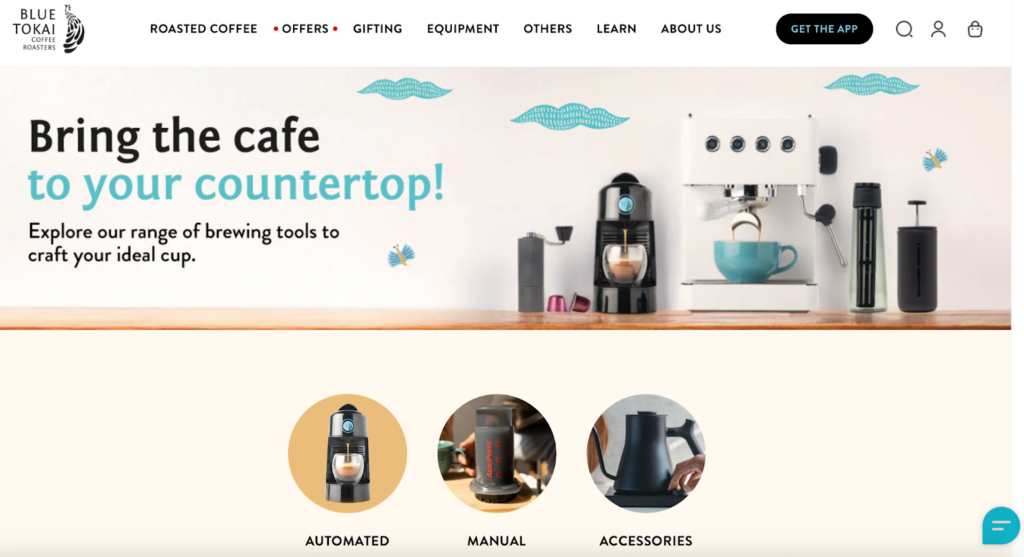
Another factor that adds to Blue Tokai’s competitive edge is its product range, which includes whole beans, ground coffee, easy pour sachets, cold brew cans, and RTD options. The brand also offers equipment and merchandise, ensuring there’s something for every customer segment.
6. Cultural authenticity
While many of Blue Tokai’s competitors take a playful and western approach, the brand focuses on remaining Indian. It celebrates India’s art, heritage, and coffee. This cultural rootedness is something that sets it apart and that is hard for its competitors to replicate.
Blue Tokai’s target audience: Building India’s coffee generation
Blue Tokai’s target audience includes urban professionals, coffee enthusiasts, home brewers, and convenience seekers. These are consumers who have the following characteristics:
- They look for premium experiences at home and office
- Are willing to pay more for quality and convenience
- They appreciate craft, storytelling, and Indian culture
- They’re open to transitioning from instant to craft coffee
- Want to learn about brewing and origins
- They enjoy the ritual of making coffee, invest in coffee equipment, and look for variety in roasts
- Professionals who want quality without hassle, such as easy pour sachets
And here’s how Blue Tokai’s branding serves this target audience:
- Color codes products to make selection easy
- Takes an educational approach to help customers be informed
- Offers coffee in multiple forms, such as beans, instant, to cater to different customer needs
- Creates community and learning spaces
- Offers subscription model to enhance convenience and savings
Blue Tokai’s product strategy: Comprehensive yet evolving
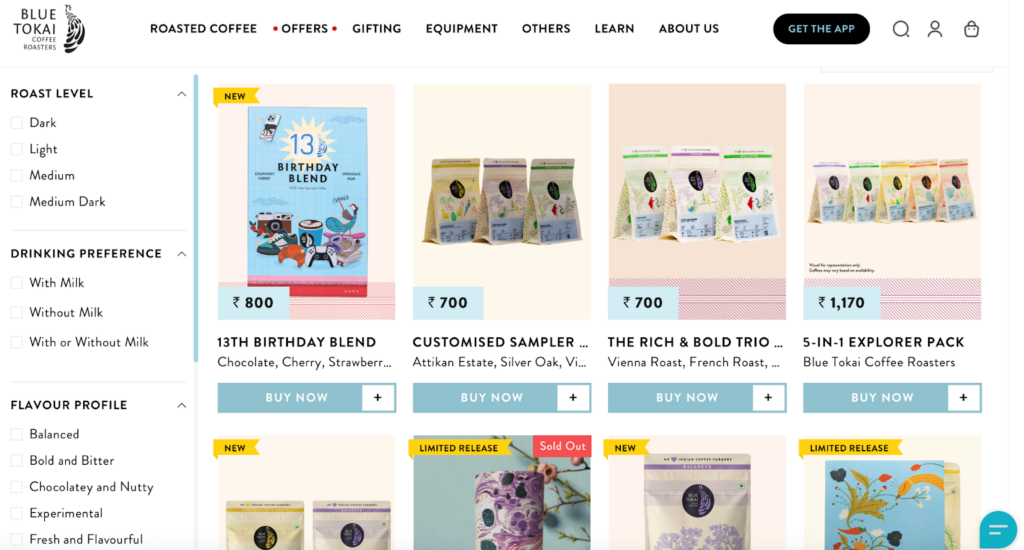
Blue Tokai offers a comprehensive product range, including roasted coffee bean packs, a convenience range that includes instant pour over sachets and cold brew bags, ready-to-drink cans, and equipment and accessories for coffee.
Additionally, the brand also offers coffee subscriptions. The brand ensures there’s something new its customers can look forward to by introducing and launching new products and seasonal editions from time-to-time. This increases customer engagement.
Here’s Blue Tokai’s product range:
1. Core: Roasted coffee beans
- Single-origin coffees from specific Indian estates
- Various roast levels (light, medium, dark)
- Blends for specific use cases (espresso, cold brew, filter)
- 75g samplers to 1kg bags
2. Convenience range
- Easy Pour sachets – No equipment needed, premium coffee in 4 minutes
- Cold brew bags – Steep overnight for café-quality cold brew
- Instant coffee – For the quick-fix crowd
3. Ready-to-drink
- Cold brew cans (250ml) – Multiple flavors: Classic Bold, Classic Light, Elderflower, Orange Mint, Passion Fruit, Coffee Cherry
- Iced latte cans (220ml) – Creamy, sweet, ready to drink
- Nitro-flushed for long shelf life without preservatives
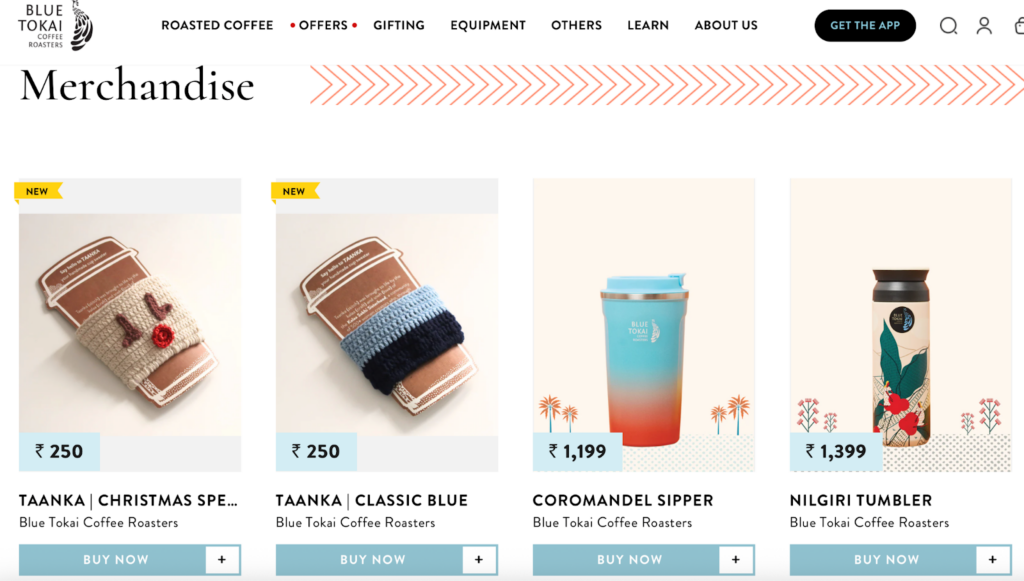
4. Equipment & accessories
- Brewing equipment (French press, AeroPress, pour-over)
- Grinders
- Mugs and tumblers
- Merchandise
5. Subscriptions
- Customizable plans (coffee type, grind, frequency, quantity)
- Up to 20% savings
- Flexibility to skip, pause, or modify
Blue Tokai’s marketing channels: An integrated and strategic approach
This section explores the brand’s marketing channels, what it does, how, why, and key takeaways.
1. Digital marketing
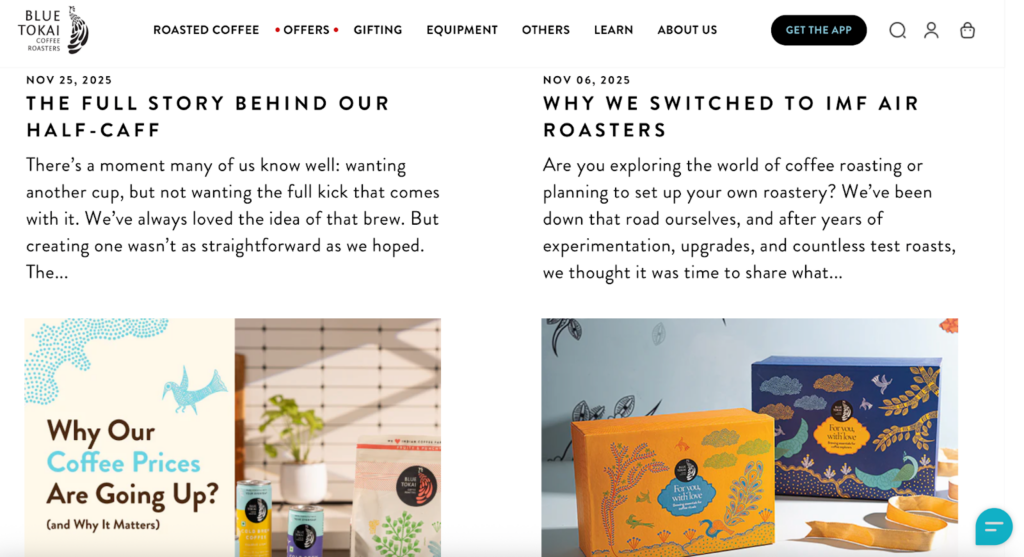
The brand’s digital channels include its website, SEO strategy, social media platforms (Instagram, Facebook, LinkedIn), and a robust content marketing strategy that includes SEO, blogs, etc.
Its digital marketing strategy is effective due to many reasons. The brand keeps the visual elements clean and product photography focused. The educational content and subscription model keep the eCommerce experience seamless.
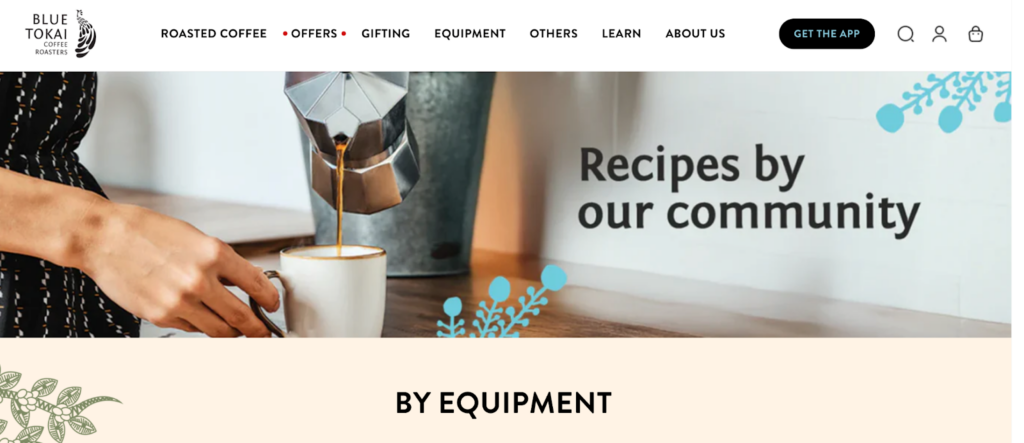
The brand’s social media channels share unique content, such as behind-the-scenes content, user-generated content (UGC) such as recipes, stories of their team members and farmers, and reels with coffee brewing tutorials. For its LinkedIn page, the brand takes a strategic approach focusing on B2B partnerships, company culture and hiring, and thought leadership in the industry.
2. Offline marketing experiences
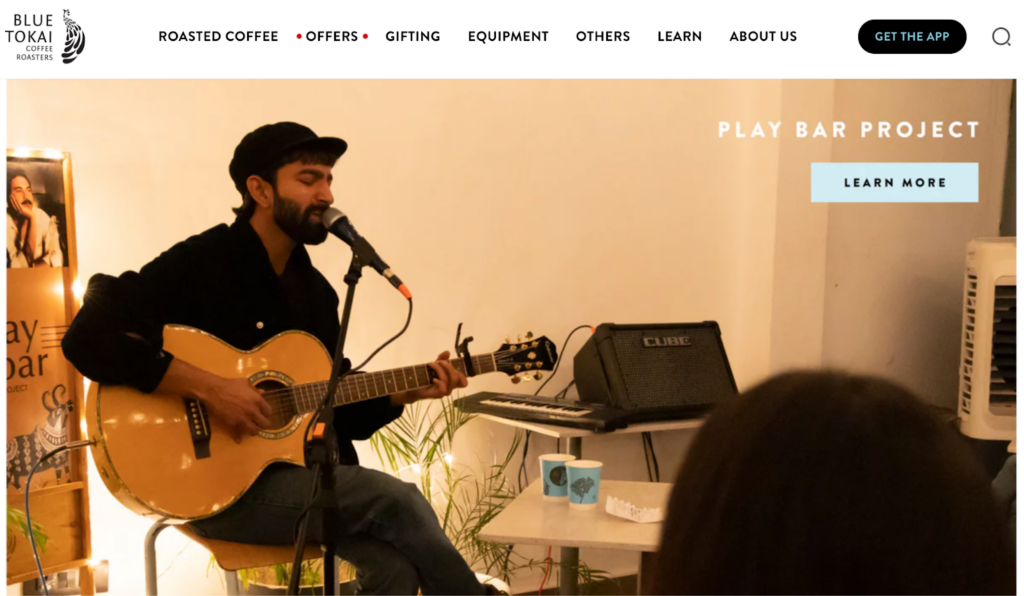
Blue Tokai has more than 110 cafes that have consistent decor and branding. Its cafes also have art, books, and coffee products, creating an immersive experience. Its blue ceramic cutlery goes with its brand identity and menu boards are filled with educational content.
The brand offers various types of roastery tours and cupping sessions for its customers to enjoy the bean-to-cup experience. These offline initiatives also help the brand build customer loyalty through participation. Besides, it provides the brand UGC, which they share on social media.
3. Partnerships & B2B
Blue Tokai has a robust partnerships and B2B strategy that includes collaborations and partnerships with third-party platforms, such as Swiggy, Instamart, blinkit, Amazon, Percup, Le Marche, premium grocery stores, corporate office deliveries and subscriptions, and hotels, restaurants, and co-working spaces.
4. Influencer & community marketing
Blue Tokai leverages influencer marketing and community initiatives through partnerships with coffee enthusiasts, food bloggers, by sharing UGC, featuring customer recipes, and organizing coffee community events and workshops.
Blue Tokai’s sales channels
Blue Tokai has an omnichannel presence which includes DTC, cafes, marketplaces, and retail partnerships, among other initiatives.
1. Direct-to-consumer
Its website provides the brand its primary revenue through product sales and subscriptions. The website is characterized by personalization initiatives, subscription offering, a wide product range, and educational content. The brand takes complete control over presentation, messaging, and customer experience to ensure effectiveness.
2. Cafes
The brand currently has more than 110 outlets that generate revenue through food and beverage sales. With plans to expand to more than 350 cafes by 2027, the brand ensures each of its outlets offer a consistent brand experience, from the blue coffee mug to educational content.
3. Marketplaces
The brand has widened its reach by collaborating with online marketplaces such as Amazon. It gives the brand an opportunity to share product reviews, offer easy delivery, and compete with other coffee brands in the market. Blue Tokai ensures brand consistency on marketplaces by consistency in product photos, descriptions, content, etc.
4. Quick commerce
Today’s modern brands cannot afford to miss out on quick commerce. Blue Tokai understands that. The brand partners with Swiggy, Instamart, Blinkit, Zepto, and other such quick commerce platforms to cater to customer needs. Here too, the brand maintains branding consistency with thumbnail images of products, color codes, etc.
5. Retail partnerships and wholesale/B2B
With partnerships with eCommerce retail and wholesale brands, such as Le Marche, gourmet stores, hotels, restaurants, corporate offices, and co-working spaces, Blue Tokai is able to cater to its target audience in various places. Its stand-out package branding, colors, and identity help the brand distinguish itself in the crowded craft coffee market, especially in urban spaces.
Key takeaways for coffee brands from Blue Tokai branding
Here are a few takeaways from Blue Tokai’s branding strategy that you can implement in your coffee brand.
1. Create authenticity
Blue Tokai roots the brand in authentic culture, not generic identity or following the crowd. Its Indian identity creates differentiation in a meaningful way.
2. Ensure transparency
From sharing farmer stories on social media to roast dates and detailed information on origins, the brand builds trust via transparency and sharing details related to its coffee.
3. Create engagement
The brand’s product strategy keeps in mind its various target audience. Therefore, it offers Easy Pour for beginners, beans for connoisseurs, and RTD for convenience seekers. A key takeaway here is to meet various customer needs to increase engagement.
4. Storytelling via packaging
Blue Tokai’s product packaging features Indian folk art, color coding, personalization, and functional design, turning packaging into a marketing opportunity. Turn every element of your brand into a marketing and sales asset.
5. Experiences over transactions
Cafes with consistent decor and space experience, brewing classes, events, and more, the brand creates reasons for customers to engage and spend time with the brand, rather than merely shopping for its products.
6. Create omnichannel experiences
Blue Tokai knows that its customers are everywhere, in cafes, on online marketplaces, social media, etc. And hence, it takes an omnichannel approach to meet customers wherever they are. It’s an effective lesson for today’s modern brands.
Also read: Lessons from Sleepy Owl’s branding strategy
Summing up
Blue Tokai is not just a coffee brand. It is one that has changed the way Indians drink and prefer their coffee. It is adding to creating a coffee cultural movement.
The brand’s success proves that storytelling, authenticity, personalization, and customer education can be powerful tools to engage customers.
Are you ready to build a brand like Blue Tokai? At the Brand Strategy Lab, we help coffee brands, among other industries, to craft brand positioning strategies, visual identities, and go-to-market plans that don’t just look good, but are effective in laying strong foundations for future growth.