We all know that you can’t afford to skip branding anymore.
Right now, the pet care industry is booming. In fact, it’s one of the fastest-growing consumer markets globally, driven by a generation of pet parents who treat their dogs and cats like family. Sometimes better than family.
But with that growth comes competition. A lot of it. That’s where branding comes in. This guide walks you through the complete branding journey, from defining your identity to designing visuals and building lasting customer love.
Why Branding Matters in the Pet Industry for 2026
Let’s talk big picture. The pet care industry isn’t a niche anymore. With the global pet care market booming and competition heating up, brands that lead with intention, not just cute packaging are the ones winning long-term.
Let’s break down why branding is critical for pet businesses right now:
1. Rapid Growth of the Pet Care Market
The global pet care market is expected to surpass $350 billion by 2027. In the U.S. alone, 66% of households now own a pet. That’s not just a lifestyle shift, it’s a spending one.
But growth brings saturation. When every shelf and search result is flooded with options, great branding is what pulls your customer in and keeps them coming back.
2. Brand Trust = Brand Loyalty
People don’t buy for pets the same way they buy for themselves. These are emotional purchases.
People don’t stay loyal to “products.” They stay loyal to brands that reflect their values and love their pets as much as they do.
3. Branding is Your Differentiator
Let’s say you make plant-based dog treats. So do hundreds of others. What makes you different? Your ingredient list? Your sourcing? Your price point? Maybe. But let’s be honest: most customers won’t dive that deep.
What actually makes you the one is how clearly and consistently your brand tells a different story.
4. Perceived Value Starts with Your Brand
Here’s a hard truth: the better your branding, the more you can charge. Two nearly identical products can exist, one sells at a premium, the other chases discount sales. The difference? Branding.
Branding signals quality. Quality influences price. And price is justified by perception.
How to Build a Brand for Your Pet Business
Now let’s go step-by-step building your pet brand:
1. Defining Your Brand Identity
Your brand identity isn’t just your logo or color palette. It’s the strategic intention behind your business. The foundation that shapes how you show up and your customer’s perception of your brand.
Here’s how to define your brand identity:
Clarify your mission, vision, and values
Start by asking:
- Why do we exist?
- What change do we want to make in the pet world?
- What principles guide every decision we make?
These questions form the foundation of your brand.
Take The Farmer’s Dog, for example. Their mission is simple: to bring real food to dogs. Everything they do, from their minimalistic packaging, to their messaging, is all rooted in transparency and wellness.
If you skip this step, you risk building a brand that reacts instead of leads.
Choose a brand personality
Is your brand playful or premium? Quirky or nurturing? Loud and energetic or calm and reassuring? Think of personality as your brand’s voice if it was a human. It shows up in every caption, email, and product description.
For example:
- Pedigree feels approachable, friendly, and family-first. Its tone is reassuring, often centered around nutrition and care.
- Wild One feels modern, stylish, and minimal. Imagine the kind of brand that is built for design-conscious pet parents. Sleek packaging, muted colors, and clean typography.
Pick 2-3 traits that best capture your brand’s energy. Stick to them.
Create a unique brand story
Every strong brand has a backstory.
And, therefore, your “why” matters. Whether it started with your own pet’s health struggles, or a gap you spotted in the market, share it.
Hound & Co., a niche DTC brand in Australia, built its brand on calming solutions for anxious rescue dogs, born from the founder’s own experience with their adopted pup. It’s honest and instantly positions them as more than just a product.
People don’t just buy from you, they buy into you. Your story is what makes it happen.
Understand your brand archetype
Brand archetypes are psychology-backed character types that reflect your brand’s deeper identity. They help create consistency in tone, visuals, and messaging.
Here are three examples that work well for pet businesses:
- The Caregiver: Offers support, nurtures trust, emphasizes health and safety. (e.g. Heads Up For Tails, Supertails)
- The Explorer: For adventure-focused pet brands that tap into freedom and outdoor bonding. (e.g. Ruffwear)
- The Innocent: Rooted in purity, simplicity, and honesty—great for health-conscious or minimalist brands. (e.g. The Honest Kitchen)
You don’t have to be by-the-book, but choosing a guiding archetype helps you show up with more clarity and consistency.
2. Know Your Audience: Pet Parents Aren’t All the Same
The pet industry isn’t one-size-fits-all. Neither are the people buying from you. If you try to speak to everyone, you’ll end up connecting with no one.
Let’s break down how to truly understand your audience:
Segmenting the pet parent demographic
Start by mapping out the key segments in your space. A few common ones:
- Urban millennials: Think apartment-living professionals treating pets like children. They’re on Instagram, order online, and love stylish, convenient products. (e.g. Wild One, BarkBox)
- Premium shoppers: Willing to pay more for organic, handmade, or vet-approved products. Trust is everything. (e.g. Heads Up For Tails, The Farmer’s Dog)
- First-time pet parents: Need education, guidance, and hand-holding. Often anxious, always Googling. (Perfect audience for content-driven brands)
- Rescue and shelter supporters: Values-driven. Prefer cruelty-free, sustainable, or socially conscious brands. (e.g. brands that give back or support adoptions)
- Small-town pet parents: Budget-conscious. Rely on community recommendations. Trust local vets more than Instagram reels.
You don’t need to serve all of them. You just need to know which group you serve best.
Understand their pain points, values, buying habits
Good branding doesn’t start with what you want to say. It starts with what they need to hear.
Ask:
- What worries them?
- What excites them?
- What values drive their buying decisions?
If they value clean ingredients, don’t just say “healthy”, show transparency. If they want convenience, simplify your buying process.
Once you understand their life and priorities, your messaging is easy to figure out.
Build customer personas
When you give your audience a face and a name, you stop guessing. You get specific about what they want, how they think, and what language actually speaks to them. Think beyond demographics and focus on behaviors, beliefs, and priorities.
For example:
Instead of saying “young pet owners,” think:
“A 30-year-old pet parent who treats their dog like a child, shops online, follows petfluencers, and prefers sustainable, well-designed products.”
These details guide everything—from product to packaging to Instagram captions.
3. Choosing a Brand Name and Tagline That Sticks
Your name and tagline are two of your most important branding decisions. They’re not just what people see first, but what people remember. Here’s how to approach both with strategy and substance.
What makes a pet brand name memorable and unique
Short, distinct, and emotionally sticky: that’s what makes a name memorable. Choose something easy to say and spell, with a clear personality. Steer clear of generic terms like “pet” or “dog” unless paired with something unexpected. Aim for originality that reflects your brand’s vibe.
Keyword considerations for SEO and domain availability
Before finalizing a name, check domain and social handle availability. Run a Google search and see what shows up. If it’s crowded or confusing, it’s not ideal. A name that’s unique is easier to rank for and easier to grow.
Tips to craft a strong tagline that communicates value and tone
A good tagline does two things: it tells your audience what you do, and it gives them a reason to care.
Take The Farmer’s Dog—“Smarter, healthier pet food.” It’s clear, benefit-driven, and backed by credibility. BarkBox nails personality with “The joy of a million tail wags.” Meanwhile, Heads Up For Tails keeps it simple and emotive with “For the love of pets.”
Legal check: trademarks and availability
Before you get attached, do a quick legal sweep. Check trademark databases to ensure your name isn’t already registered in the pet category, or anything similar. This isn’t just about legality. It’s about protecting your ability to scale without conflict or confusion down the line.
4. Designing a Visual Identity That Speaks to Pet Lovers
Your visual identity is your brand’s body language. Before anyone reads a word, they see you and form opinions in seconds. In the pet industry, where emotional resonance is everything, your design choices need to do more than just look cute.
Logo: Memorable, Scalable, and Emotionally Resonant
Your logo doesn’t need to show a pet to work—but it does need to feel right. The best logos are simple enough to scale down (like on a tag or Instagram profile) and strong enough to stand out.
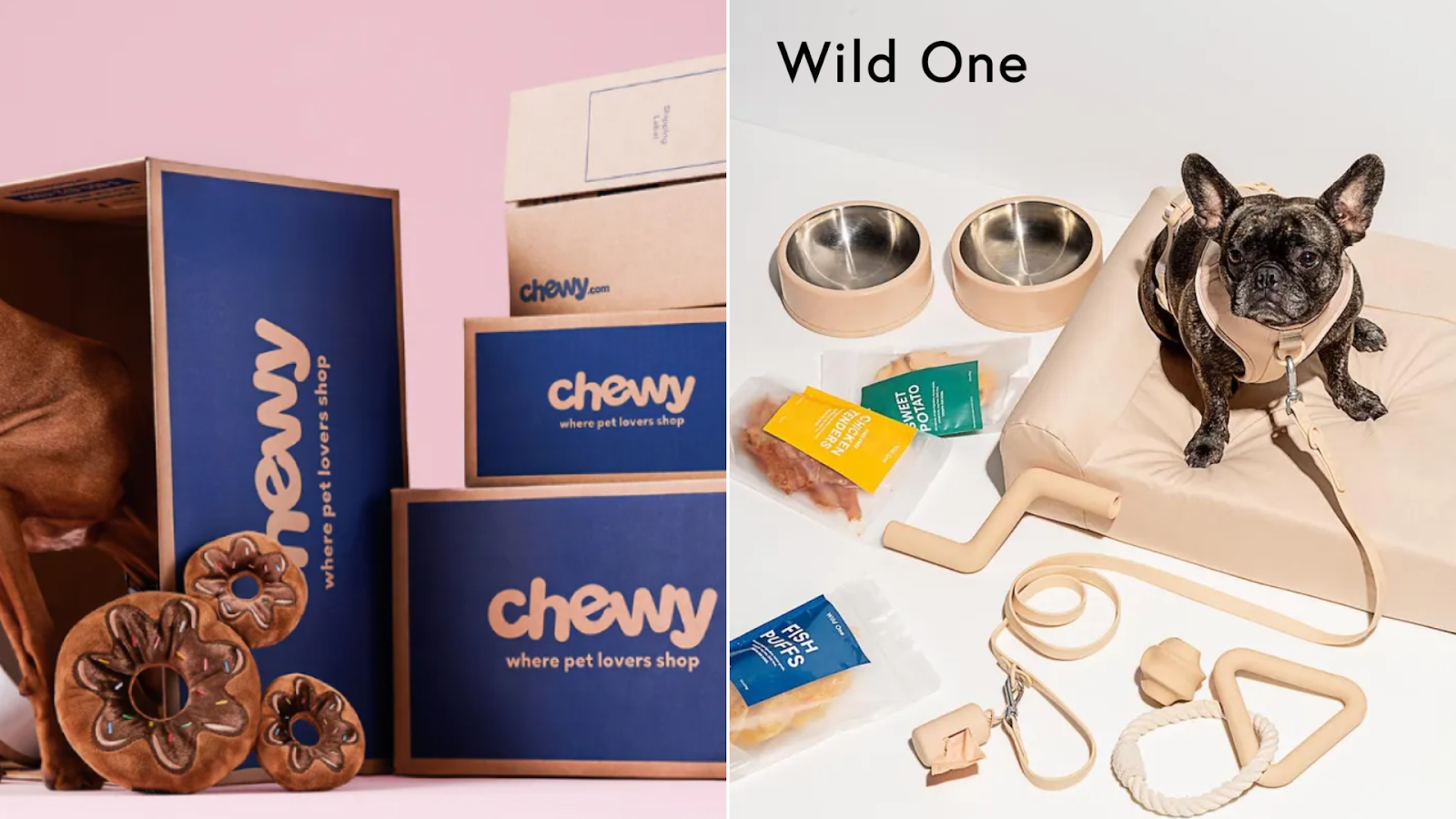
- Chewy uses a rounded, friendly wordmark that feels soft and accessible.
- Wild One keeps it sleek with clean, sans-serif type and minimalist styling.
Avoid overly complex illustrations or trendy icons that may feel dated in a year. Think longevity, not novelty.
Color Psychology For Pet Brands
Colors signal emotion and values before you say a word.
- Warm tones (like oranges, corals, and browns) feel playful and friendly.
- Cool tones (like teal or mint) evoke calm, cleanliness, or wellness.
- Neutrals + gold accents can create a premium, luxurious feel.
Heads Up For Tails, for instance, leans into soft, nurturing tones, suggesting warmth, care, and trust. Meanwhile, Wild One uses bold, modern palettes that align with its sleek, urban positioning.
Fonts & Typography
Fonts are often overlooked but they say a lot. Fun and rounded fonts feel playful. Sleek sans-serifs feel modern. Your typeface should be legible and consistent across digital and physical formats.
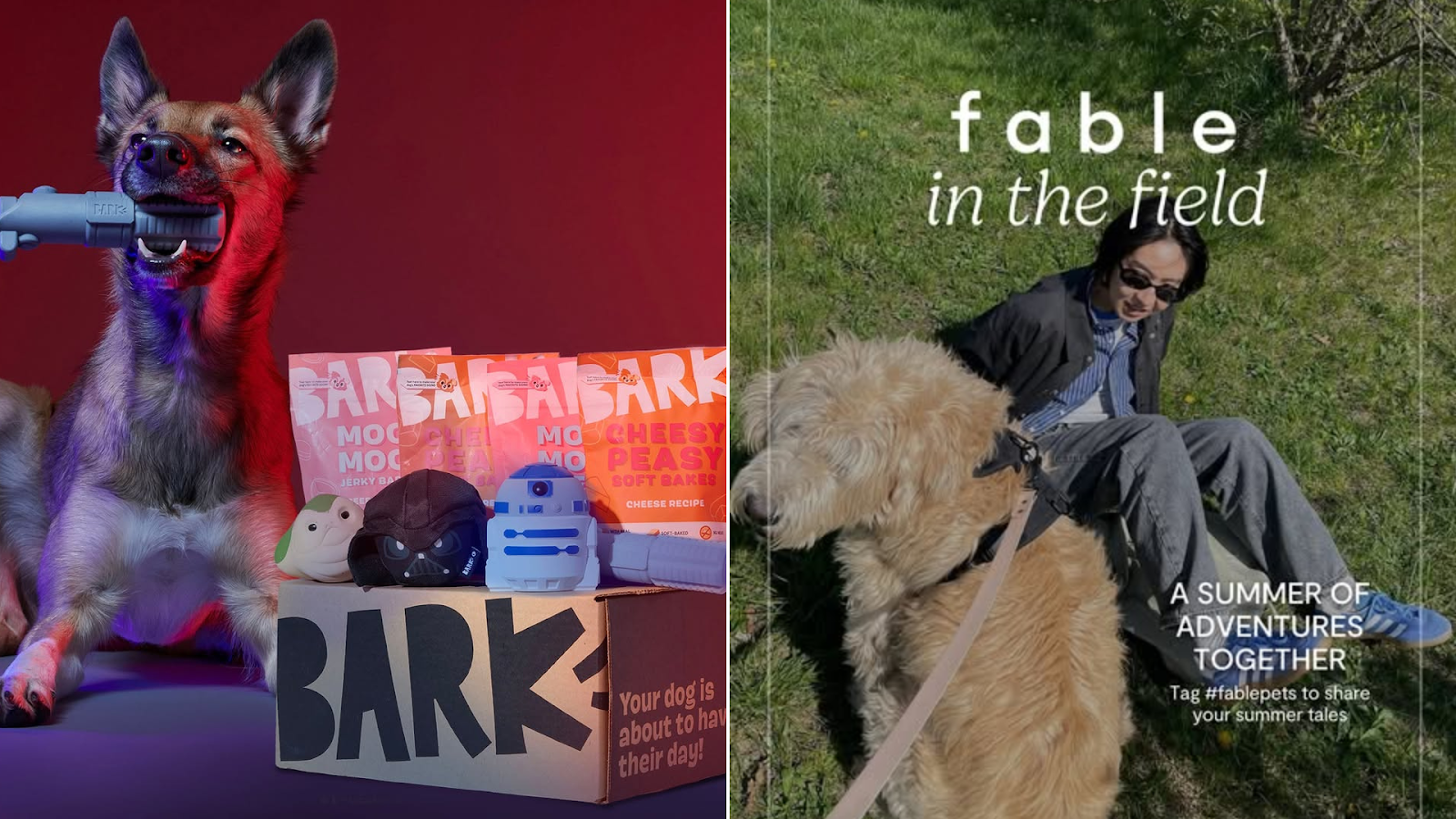
- BarkBox opts for bold, chunky sans-serifs that feel fun and expressive.
- Fable Pets uses a minimalist font to reinforce its sleek, design-led vibe.
Iconography and Brand Assets
A thoughtful icon set or design motif can create consistency and expand your visual identity beyond the logo.
Think product illustrations, Instagram highlight covers, or small details on packaging. Done right, these subtle design elements become signatures.
Cohesive System: Think Across Touchpoints
Your visuals should flow seamlessly across touchpoints. That doesn’t mean using the same design everywhere, but it does mean using the same mood, tone, and visual logic.
Your Instagram should feel like your packaging. Your emails should echo your website. Consistency builds trust. Inconsistency breaks it.
5. Define your Voice & Tone
Visuals get attention. But voice builds relationships. And in the pet industry, where trust, empathy, and personality matter, how you say things is just as important as what you say.
Define Your Tone
Your tone should match your brand personality. If your products are premium and minimal, your voice should sound refined and intentional, not overly casual. If you’re playful and fun, your tone can be quirky, humorous, even a little cheeky.
BarkBox is known for its cheeky, witty voice, like your dog wrote the caption.
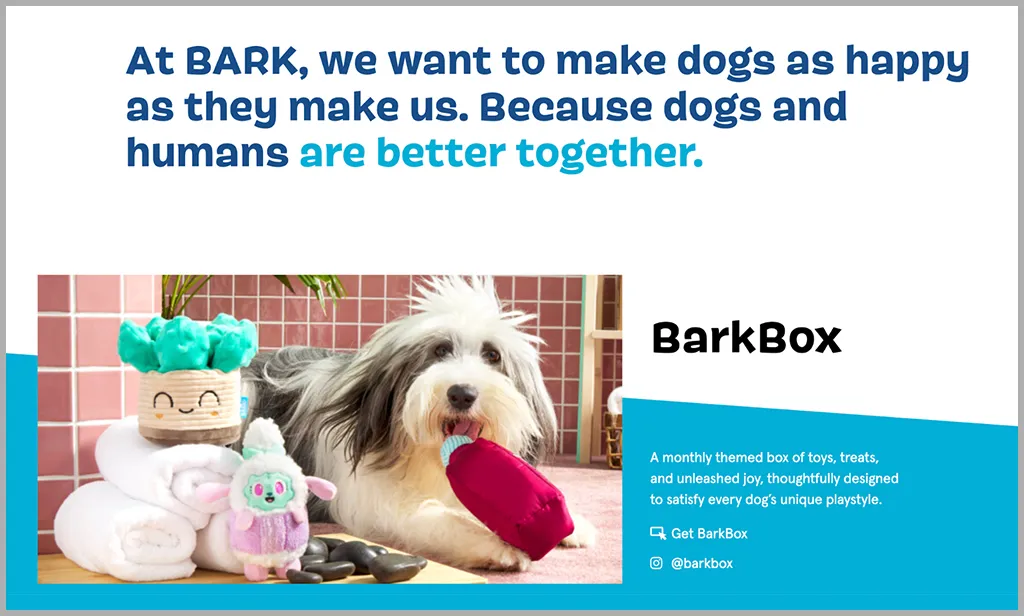
Choose 2–3 tone traits and let them guide all your writing. Consistency = trust.
Write with Empathy for Pets and Their Humans
You’re not just selling treats or collars. You’re speaking to someone who considers their pet family. So talk like you understand that bond.
Use language that shows you care. Acknowledge real concerns, like ingredient safety, behavioral challenges, or post-surgery comfort. Good copy makes the customer feel seen rather than sold to.
Adapting Across Channels
Your tone should be consistent but the way you speak can shift based on the context.
- On Instagram, you might be more casual, caption-driven, and visually playful.
- In email newsletters, a slightly more thoughtful and informative tone works better.
- On product packaging, be brief, benefit-first, and emotionally reassuring.
- In customer service, be helpful, calming, and empathetic, even if your brand voice is usually sassy.
Know when to dial the energy up or down. But never sound like a different brand.
Stand Out: Avoid Generic Copy
Don’t fall into the trap of writing what every other brand does. Instead, say what only your brand can say. Use words your audience actually uses. Be human, specific, and meaningful. If it sounds like it could be anyone’s, rewrite it until it’s unmistakably yours.
Let’s compare:
Generic Copy:
“We provide high-quality, affordable pet products for all your furry friends.”
Sounds like every brand ever. Vague, passive, and forgettable.
Strong Copy:
“Vet-approved. Dog-tested. Parent-obsessed.” (The Farmer’s Dog)
Punchy, rhythmic, and builds trust with emotional + clinical cues.
Generic Copy:
“Treat your pet to something special today.”
Feels like a placeholder.
Strong Copy:
“Because your dog deserves clean treats—not mystery meat.” (Wild One)
Specific, bold, and grounded in values.
Voice builds emotional resonance. And in a category driven by love, loyalty, and trust—that’s a competitive edge that design alone can’t deliver.
6. Branding Across Every Customer Touchpoint
A strong brand isn’t just something you see. It’s something you experience at every touchpoint.
Let’s walk through how Heads Up For Tails applies its branding across the full customer journey:
Website
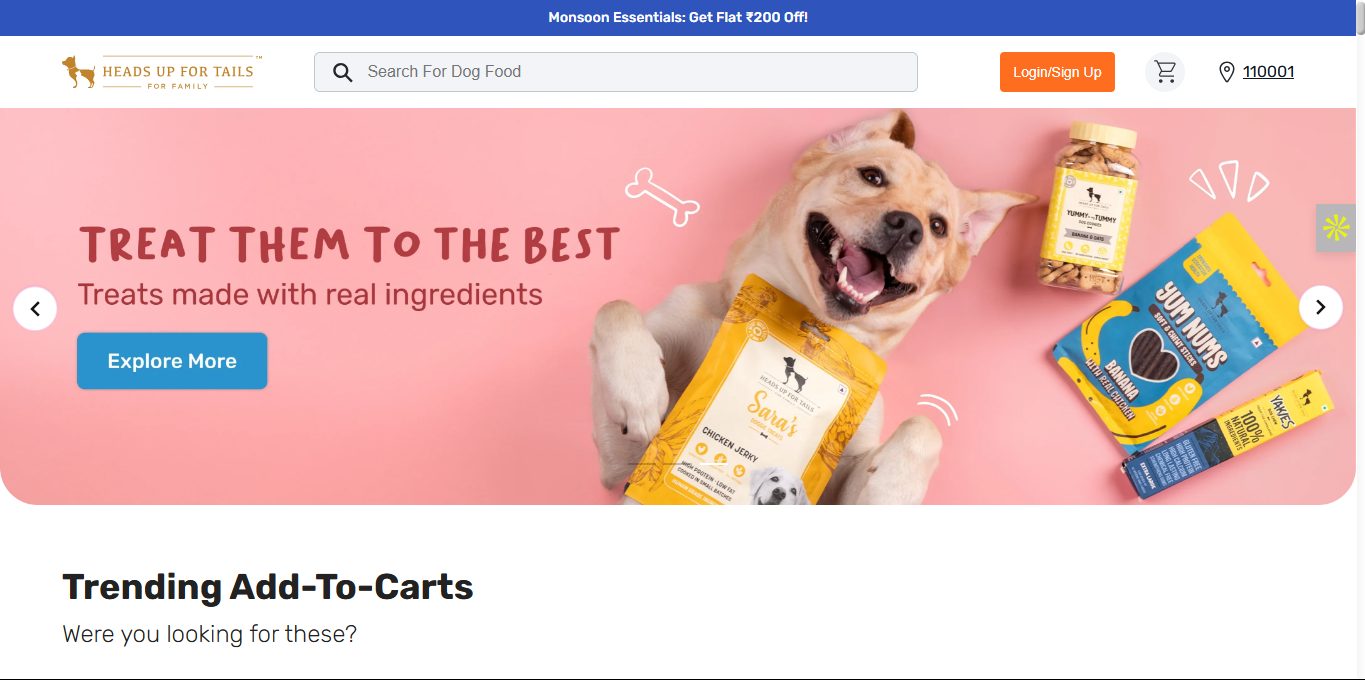
The Heads Up For Tails website doesn’t just sell—it tells a story. With soft colors, clean fonts, and thoughtful copy, it creates a calming, premium experience. Even the category names (“Snuggle Beds,” “Safe Play Toys”) feel warm and intentional, reinforcing that pets are family.
Social Media
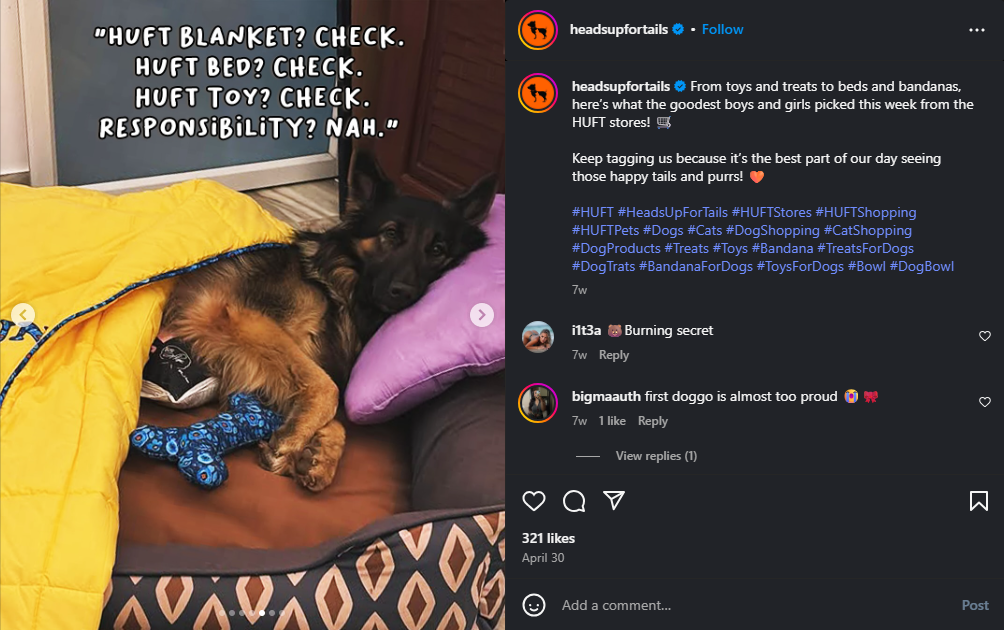
On Instagram, the same tone carries through. Posts feature real pet parents, educational tips, and emotionally resonant captions like, “They can’t say it hurts. But we can feel it.” The brand sounds like a friend, not a salesperson, building trust and relatability.
Packaging
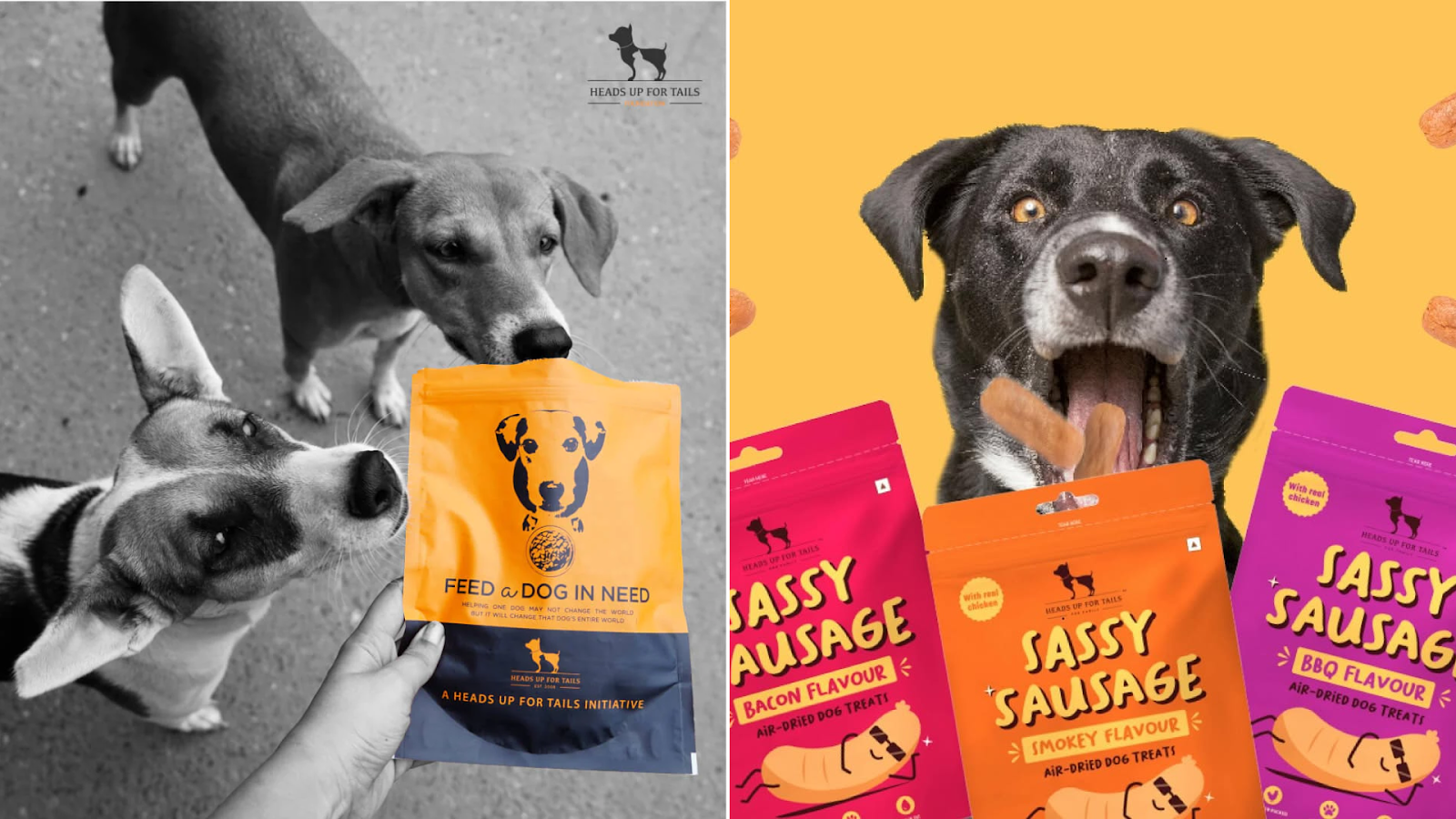
Heads Up For Tails treats packaging like a touchpoint, not an afterthought. Every box, label, and wrap feels premium but thoughtful, like a gift, not a delivery. Their packaging features bright tones, handwritten-style messages (“Made with love, for the one you love”), and simple but warm product descriptions.
Customer Service
Heads Up For Tails’ brand shows up in how they respond to questions and resolve concerns. Their tone stays calm, kind, and solution-first, matching the nurturing, pet-parent-first voice customers see on the site and socials.
In-Store & Events
Walk into a Heads Up For Tails store and the experience matches the brand you’ve seen online. Cozy, curated, and compassionate. From interiors to signage to in-store adoption drives, everything reflects their mission of caring deeply for pets and pet parents.
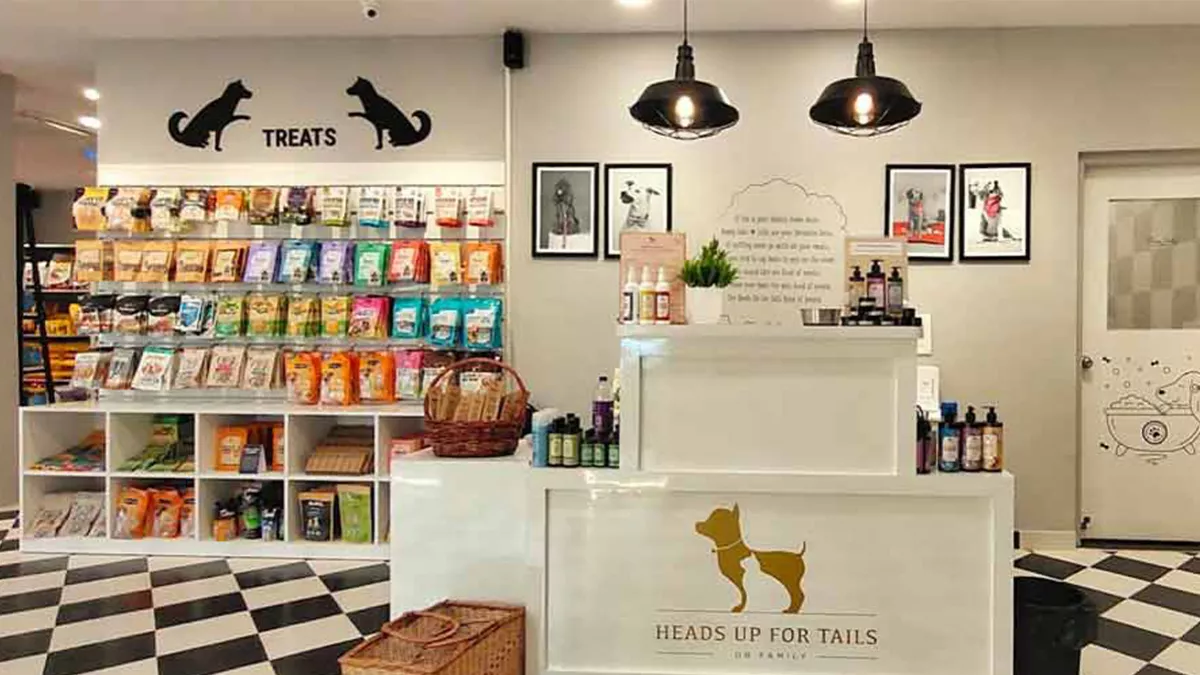
Consistent brand expression doesn’t mean carbon-copy repetition. It means showing up the same way, with the same energy and values, wherever your customer meets you.
And Heads Up For Tails? They do this exceptionally well.
7. Content Marketing That Reinforces Your Brand
Good content doesn’t just drive traffic. It shapes perception. In the pet world, where trust and care matter most, your content should feel like a helping hand, not a sales pitch.
Blogs are a great place to start. But skip the generic “10 Tips for Pet Care.” Instead, go deep on topics your audience actually needs, like ingredient education, breed-specific grooming, training basics. If your tone is playful, write like you talk. If you’re a science-backed brand, keep it expert, but clear.
Short-form video is your emotional shortcut. Reels, how-tos, and product demos show your brand personality in action. A calming grooming demo or a joyful unboxing can be more convincing than any ad.
Pet influencer partnerships help expand your reach. But this only happens if they align with your brand. Aesthetic-first brands like Wild One pick creators whose content looks and sounds like theirs. Don’t chase numbers—chase alignment.
User-generated content (UGC) builds instant trust. Reshare real customers using your products. Highlight the emotional stories. Create a hashtag your community can rally around. Then show up for them. Reply, reshare, celebrate.
Strike a balance between education and entertainment. Stay true to your tone. Every blog, video, and caption is a brand touchpoint. Make it count.
8. Social Proof & Community Building
In a category built on trust and emotion, people look to other people before they look to you. Social proof and community, therefore, become a part of your brand credibility.
Reviews and testimonials are the most immediate form of trust-building. Feature them across your site, socials, and packaging where possible. A first-time customer is far more likely to buy if they see another real pet parent vouching for you.
Case studies or transformation stories, for instance, a rescue dog thriving after switching to your food or gear, go deeper than ratings. They show the impact behind the product.
A thriving brand community gives people a reason to stay connected—even when they’re not shopping. Create value-led spaces like Facebook groups, WhatsApp updates, or newsletters where pet parents can learn, share, or feel seen.
Loyalty programs can go beyond points. Think birthday gifts for pets, early access to new collections, or spotlighting long-time customers on your page. It’s not just about rewards. It’s about recognition.
And finally, show up beyond products. Collaborate with rescues, host events, or support pet-related causes that align with your values. When people see you care about the larger ecosystem, their trust deepens.
Common Branding Mistakes Pet Businesses Make (and How to Avoid Them)
Even with the best intentions, many pet brands fall into these common traps. Here’s what to watch out for and how to course-correct early.
- Inconsistent messaging or visuals across channels: If your tone is playful on Instagram but formal on your website, it confuses your audience. Define a brand voice and visual style, and stick to it everywhere.
- Ignoring your audience’s emotional needs: You’re not just selling a product; you’re speaking to someone who loves their pet like family. If your copy, content, or visuals feel cold or generic, you’ll struggle to connect.
- Overcomplicating your brand assets: Too many colors, fonts, or logo versions dilute your identity. Simplicity creates recognition. Pick a tight visual system and commit to it.
- Neglecting storytelling: A product is replaceable. A story isn’t. If your brand doesn’t explain why it exists, what it believes in, or who it’s built for, you’ll miss out on loyalty.
- Copying competitors instead of carving your space: It’s tempting to follow trends. But branding isn’t about blending in. It’s about standing out. Take inspiration, but make it yours. Your difference is your strength.
Keep these in check, and your brand will not only feel more confident but also credible at every touchpoint.
Final Thoughts
Branding isn’t just a design exercise. It’s the foundation of how pet parents experience your business. From logo to language, every choice builds recognition, trust, and emotional connection. In a crowded, fast-growing industry, a clear and consistent brand isn’t optional. It’s your edge.
If you’re serious about building a brand that lasts, don’t wing it. Partner with experts who can shape your strategy, identity, and rollout, right from day one.