In the global wellness industry, new brands show up every week on Amazon, TikTok, pharmacy shelves, and everywhere in between. To most customers, though, one bottle of capsules looks almost the same as the next.
That’s the challenge. People don’t just buy supplements; they’re trusting a brand with their health. And if that trust isn’t there, it doesn’t matter how effective your formula is; it’s going to be hard to win the add-to-cart click or get picked off the shelf.
Branding is what bridges that gap. It’s the clarity, credibility, and consistency that make your product stand out and your business harder to copy.
In this guide, we’ll break down the key steps to building a supplement brand in 2025 that people remember, trust, and stay loyal to.
Why Branding Matters in the Vitamin & Supplement Industry
The global supplement market is set to surpass $414.52 billion by 2033. That signals growth, but it also means tougher competition, higher customer acquisition costs, and crowded shelves both online and offline.
Here’s why branding matters in the vitamin and supplement industry:
Trust and Credibility
Supplements go inside the body. Customers won’t risk their health on a brand that feels generic or uncertain. Branding communicates safety, transparency, and professionalism before the first capsule is ever tried. Without trust, even the best formula gets ignored.
Loyalty and Retention
Acquiring customers is expensive, and it’s only getting pricier. Branding gives people a reason to stay, to choose your product again instead of jumping to the next “new” option. In a category where switching is easy, loyalty is the real advantage.
Differentiation in a Saturated Market
Most supplements share similar claims like “clean,” “science-backed,” and “natural.” Without clear branding, they all blend together. Strong branding highlights what makes your product different, whether it’s sourcing, story, or experience.
Core Elements of Supplement Branding in 2026
Branding is built on clarity about who you are, where you stand in the market, and the story you’re telling. These are the three building blocks that set the foundation for everything else.
1. Defining Your Brand Identity
Your brand identity is the backbone of your business. It shapes how you show up in the market and how customers perceive you. For supplement brands, that means defining:
- Mission: Why do you exist beyond profit? Maybe it’s making clean nutrition accessible, or simplifying daily health routines.
- Vision: Where are you heading? A future where supplements are personalized? Where transparency is the industry norm?
- Values: What principles guide you? What are the non-negotiables behind your products?
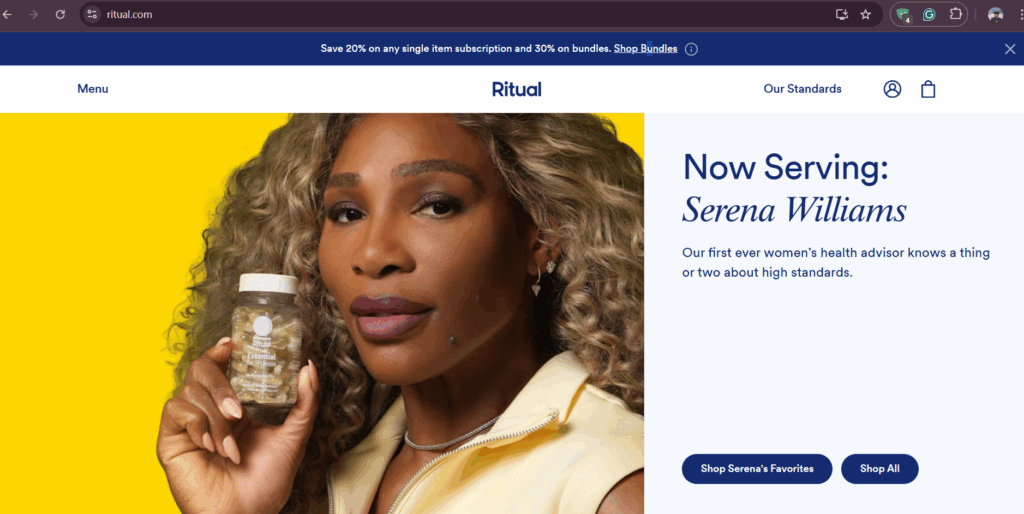
Take Ritual, for example. Their mission is centered on transparency and traceable ingredients, and it shows up in every detail, from packaging to product pages. That’s brand identity in action.
2. Positioning Your Supplement Brand in a Crowded Market
Most supplements look the same to customers. Positioning is how you stop blending in. It answers the simple but critical question, “Why should someone choose us instead of the next brand?”. Positioning means deciding who your core audience is and what they value most, then leaning into it.
3. Storytelling for Health and Wellness Brands
Science sells the product, but stories build loyalty. Customers want to know not just what’s in your capsule, but why your brand exists in the first place. Your story might start with your founder’s personal health journey, spotting a gap in the market, or a commitment to solving a specific problem. What matters is that it feels real.
Visual Branding and Packaging Design
In supplements, packaging isn’t just about looking good on a shelf. It has to balance compliance, trust, and differentiation all at once. Here’s how to get it right:
1. Packaging Compliance for Supplements
Unlike many consumer goods, supplement packaging comes with strict rules. Labels must include ingredient lists, dosage instructions, disclaimers, and in many regions, certifications or FDA-required language.
Miss a detail, and you risk fines or even losing shelf space. But compliance doesn’t mean clutter. The strongest brands integrate regulatory information cleanly into their designs.
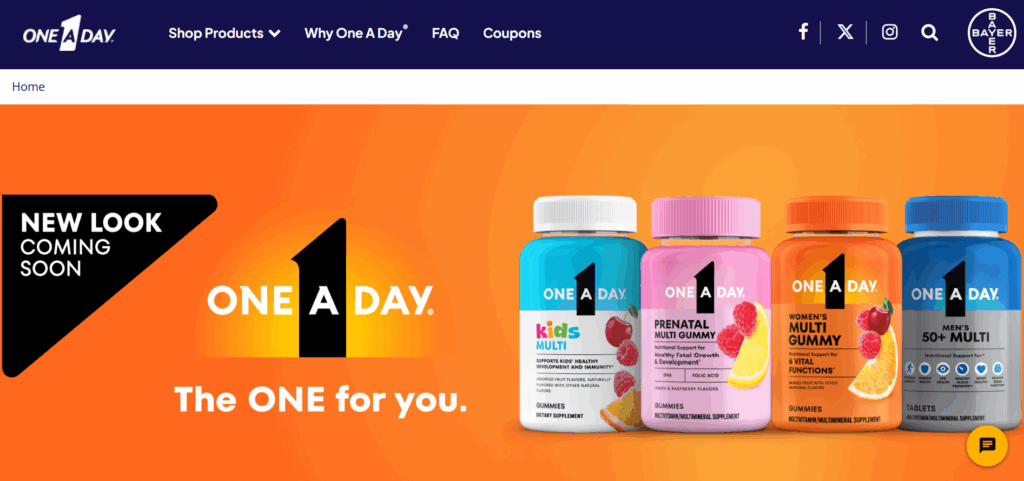
For example, One A Day demonstrates compliance clearly with its facts panel and disclaimers, while the brand name and design communicate dosage in a simple, trustworthy way.
2. Using Design to Communicate Trust and Transparency
When it comes to health products, trust starts with design. Customers often judge credibility in seconds before reading a single line of copy.
Clean layouts, legible fonts, and professional visuals signal safety and care, while overly flashy graphics or gimmicky claims can erode confidence fast.
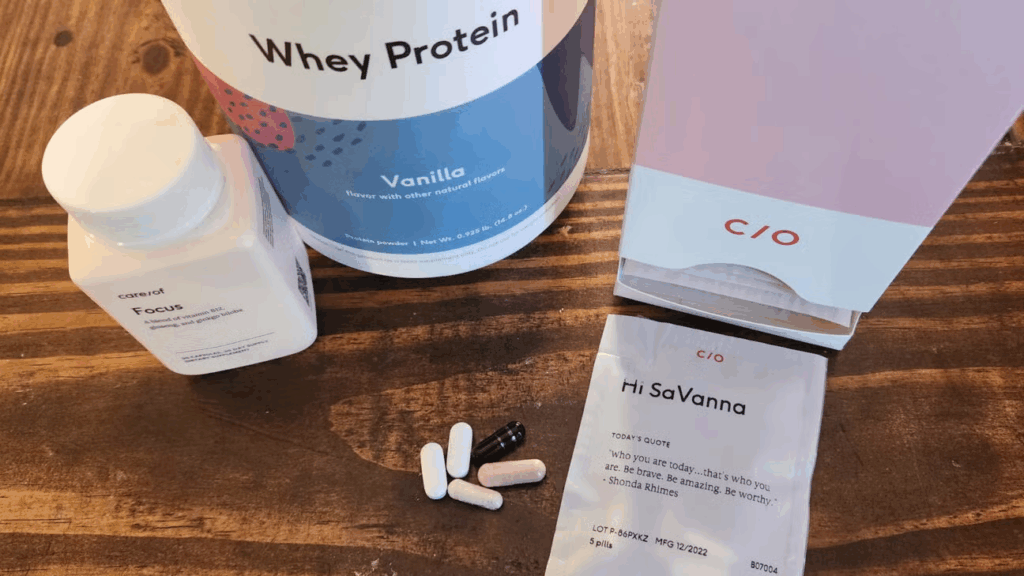
Brands like Care/of do this well. Their personalized packets with the customer’s name and message feel human and transparent, while the minimalist design communicates honesty.
3. Color Psychology in Supplement Branding
Colors influence perception long before a customer reads your label. Here are some examples of what different colors often signify in supplement branding:
- Greens & earthy tones: These shades signal natural, plant-based, and organic qualities, best to highlight sustainability or a connection to nature.
- Blues & whites: Cool, clean tones suggest science-backed credibility, clinical quality, and purity.
- Brights & pastels: These colors give off a sense of energy, positivity, and approachability, making supplements feel less intimidating and more lifestyle-friendly.
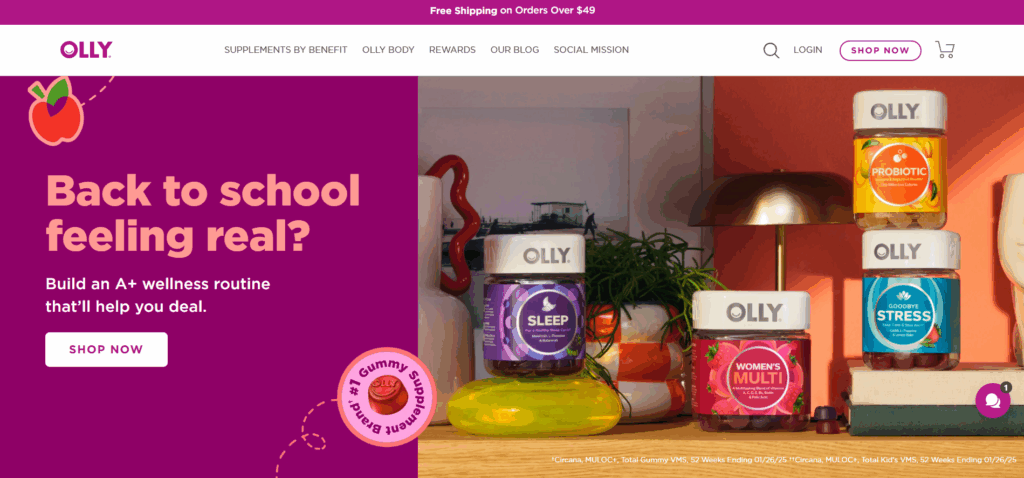
Example: OLLY’s playful pastel bottles stand out on crowded shelves and appeal to younger, wellness-conscious shoppers.
Digital Branding for Supplement Brands
Supplements aren’t just bought in pharmacies anymore. Customers research online, compare on Amazon, scroll TikTok reviews, and check brand websites before deciding what to trust. That means your digital presence is as important as your product itself. Here’s how to make it work:
1. Building a Trusted Website and Online Presence
Your website is often the first “storefront” customers see. It has to look credible, be easy to navigate, and answer questions before doubts creep in. Key elements include:
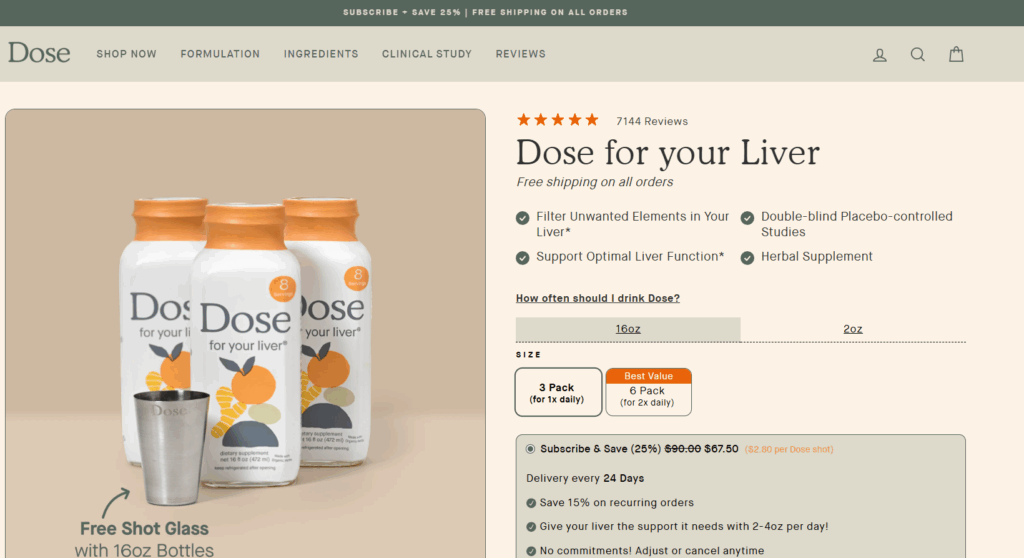
- Clear product pages: With ingredient transparency, dosage instructions, and third-party certifications.
- Educational content: Blogs, FAQs, or videos that explain the science behind your products.
- Social proof: Reviews, ratings, and testimonials upfront.
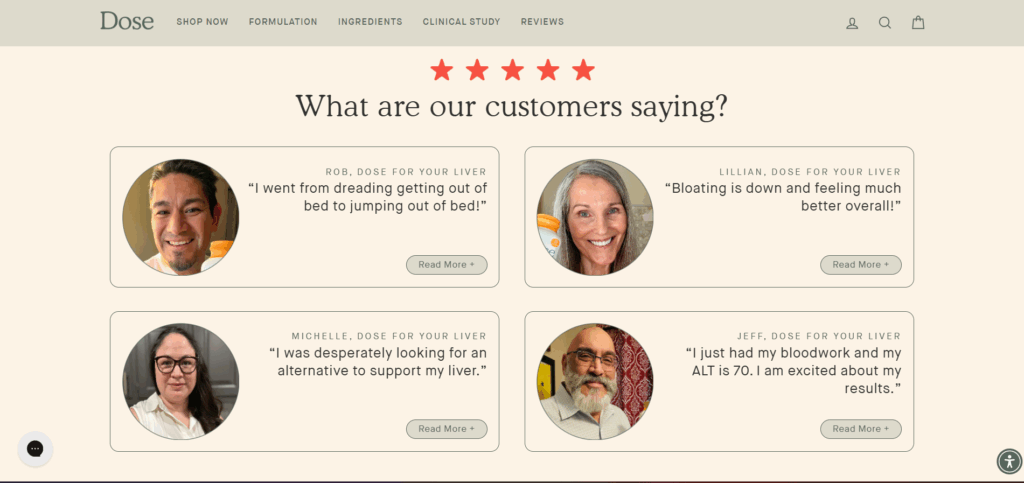
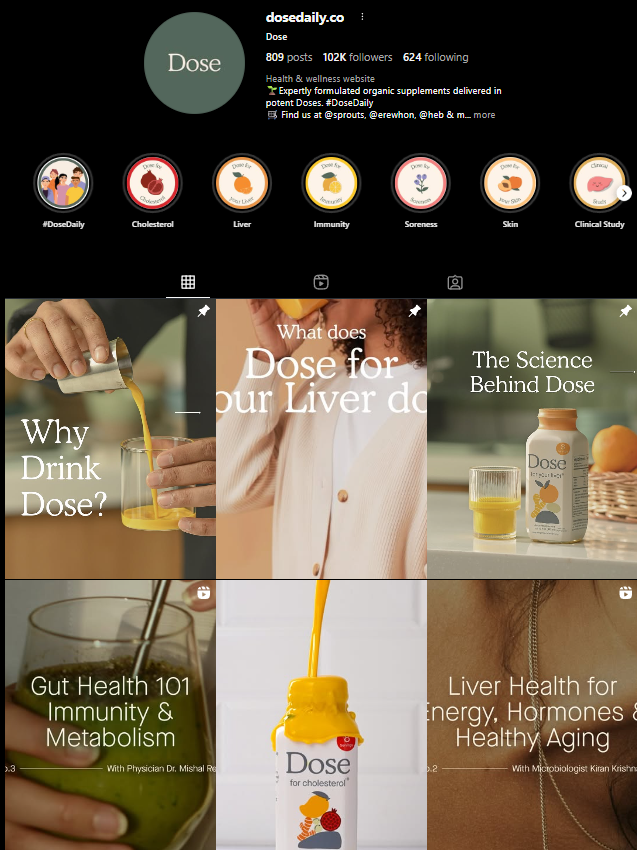
Dose Daily keeps product pages straightforward and informative, while their social profiles deliver clarity with essential info, customer reviews, and practical wellness tips.
2. Social Media Branding for Supplements
Social media is where many wellness customers first encounter a brand. Consistency matters; your tone, visuals, and values should match what customers see on your website and packaging. Here’s how to brand on social media:
- Educational posts: Share bite-sized health tips, ingredient breakdowns, or myth-busting content that positions your brand as a trusted authority.
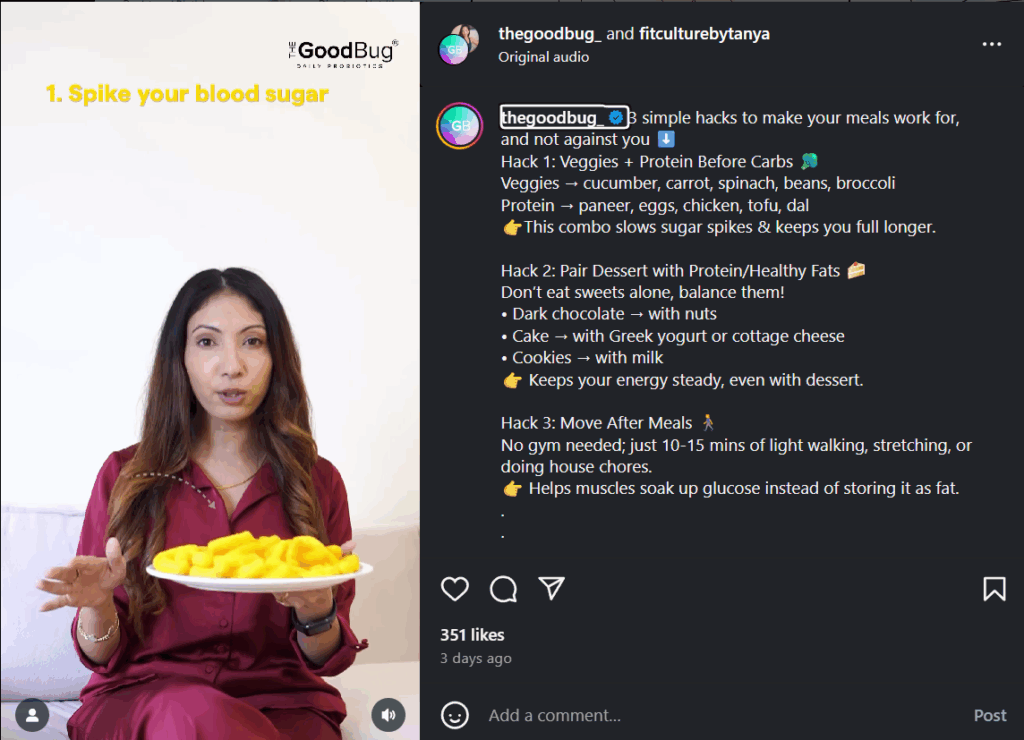
- Lifestyle content: Demonstrate how your supplement integrates into real routines, showing the product in action rather than just in a bottle.
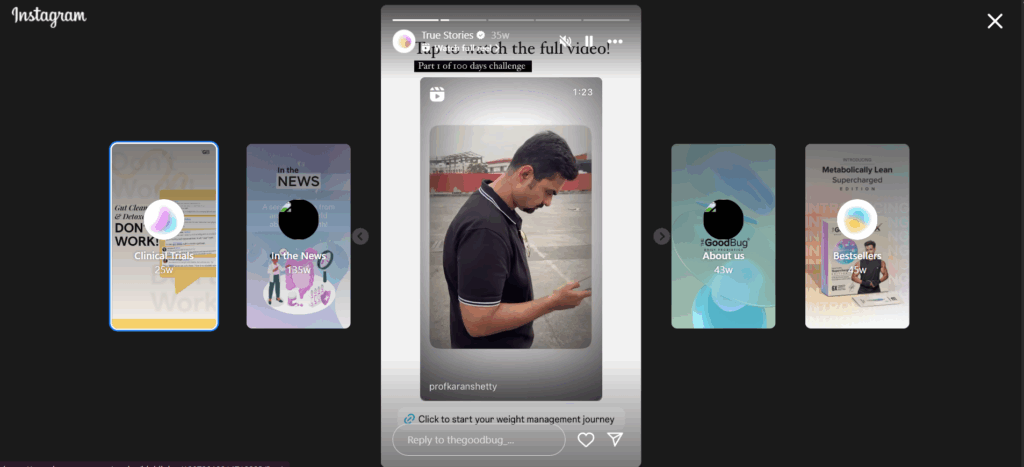
- Engagement: Use polls, Q&As, or live sessions to invite interaction, answer customer questions, and create a two-way dialogue.
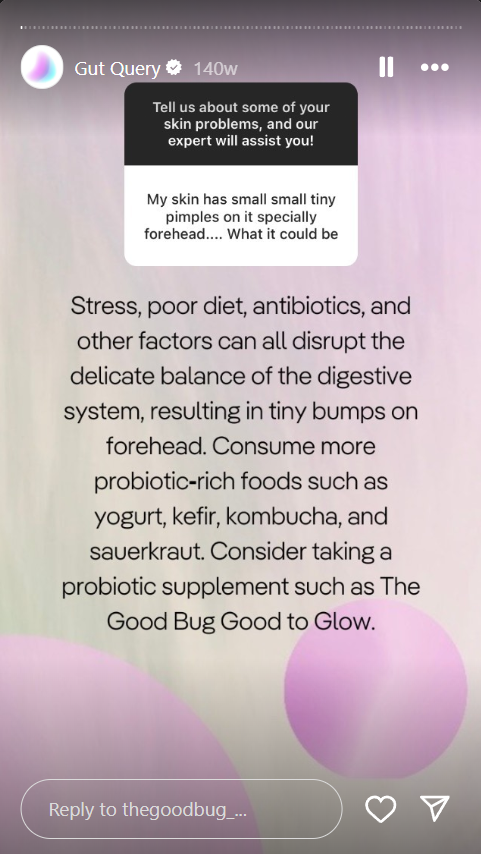
The Good Bug uses social media to build brand consistency by sharing microbiome education, product-in-action posts, Q&As, and user-generated content showcasing daily use. This mix keeps their branding clear, authentic, and engaging, while strengthening awareness and loyalty.
3. Influencer Partnerships in Wellness Branding
In wellness, people trust people more than ads. The right influencers extend credibility and reach as micro-influencers add authenticity, experts bring authority, and lifestyle creators show how supplements fit into daily life.

Wellbeing Nutrition does this well, using a mix of celebrities, nutritionists, and lifestyle creators to build credibility and awareness in the nutrition and wellness space.
Marketing Strategies to Differentiate Your Vitamin Brand
Here are some marketing strategies to differentiate your vitamin brand:
1. Educational Content Marketing (Blogs, Guides, Webinars)
Supplements are built on science, but customers often don’t understand the details. Educational content bridges that gap and positions your brand as the trusted source. Think blogs breaking down ingredients, webinars on lifestyle health, or downloadable guides on building daily routines.
2. Email and SMS Marketing for Supplement Loyalty
Retention is just as critical as acquisition in supplements. Email and SMS are direct channels to keep customers engaged beyond the first purchase.
Use them to send reminders for reorders, share wellness tips, or give exclusive offers to loyal buyers. Consistent, helpful communication turns one-time buyers into long-term subscribers.
3. SEO for Supplement Brands
With so many searches happening on Google and Amazon, SEO is a significant growth driver. Customers often type queries like “best multivitamin for energy” or “supplement for immunity.”
Ranking for these searches means your brand shows up at the exact moment of intent. Optimizing product pages, blogs, and FAQ sections with customer-first keywords makes your website a constant acquisition channel.
Real-World Examples of Successful Supplement Branding
Sometimes the best way to understand branding is to see it in action. Here are a few supplement brands that stand out in different ways:
1. HUM Nutrition
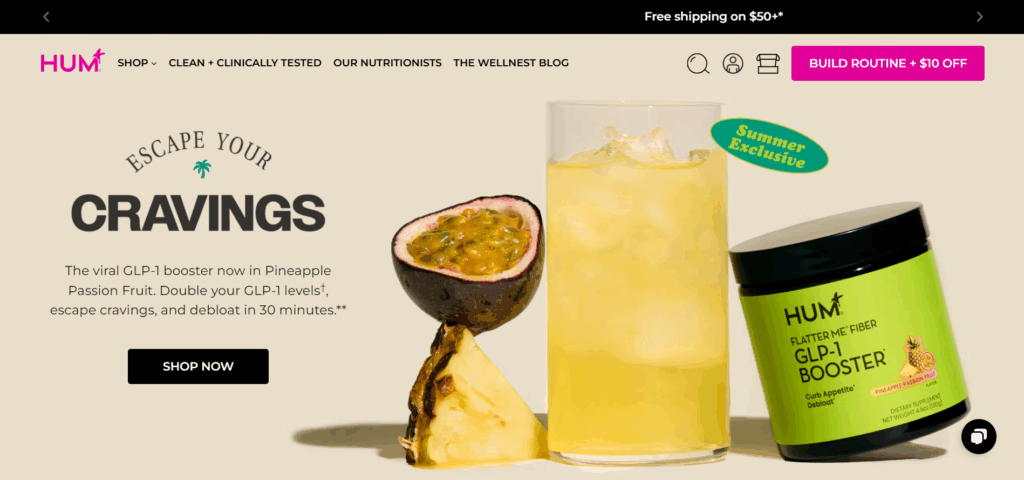
HUM built its brand around beauty-from-within positioning, using pastel packaging and playful copy that make supplements feel approachable and lifestyle-driven. Their SEO-led content and Instagram presence reinforce the same message.
2. Onnit
Onnit focuses on performance and mental clarity, branding itself as the go-to for athletes and biohackers. From bold packaging to partnerships with fitness influencers like Joe Rogan, their branding consistently emphasizes strength, focus, and peak performance.
3. Good Monk
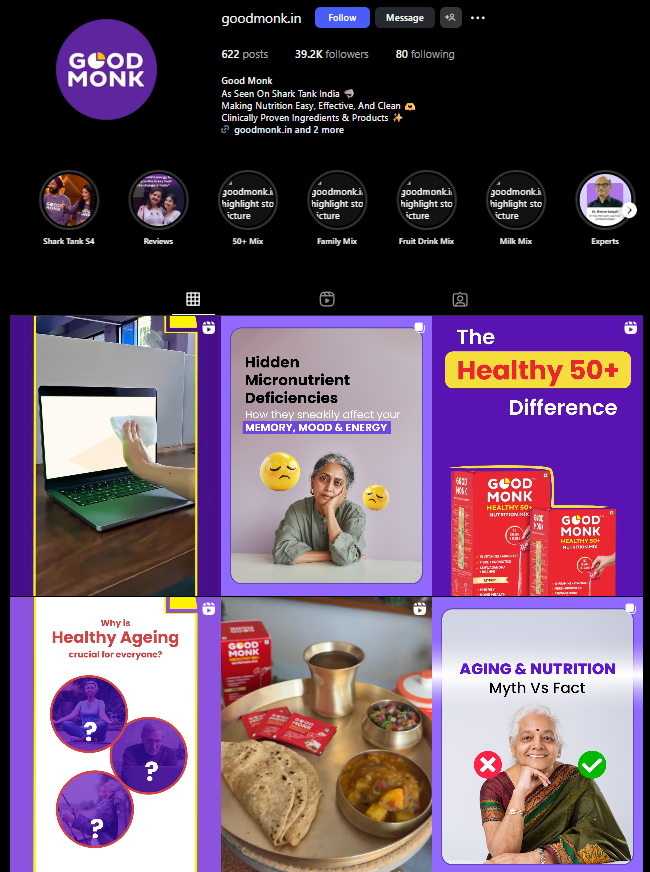
Good Monk is creating a niche in the Indian wellness market with its focus on daily nutrition and simplicity. Their branding highlights convenience, transparency, and lifestyle relevance using content and community engagement to build early trust.
4. The Nue Co.
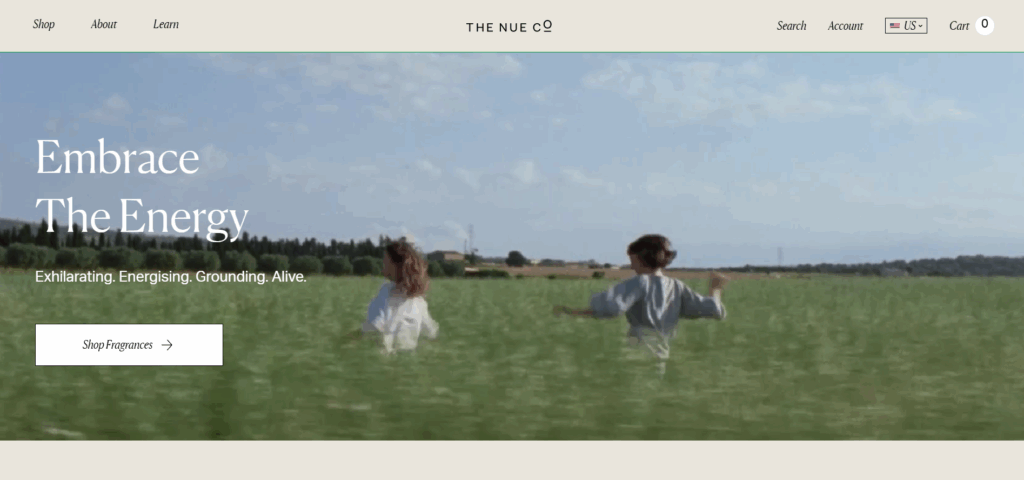
The Nue Co. blends science with minimalism, using sleek packaging, clean typography, and storytelling that connects supplements to both wellness and sustainability. Their branding makes vitamins feel premium, modern, and design-conscious.
Common Mistakes in Supplement Branding (and How to Avoid Them)
Here are some common mistakes in supplement branding and how you can avoid them:
- Generic Packaging and Messaging: Packaging that looks the same as competitors’ or uses vague copy like “clean” and “natural” gets lost on shelves. Define a unique positioning, then use design and messaging to make that difference visible at first glance.
- Overpromising Results: Claims like “instant energy” or “miracle cure” undermine credibility and risk compliance issues. Keep claims tied to research, communicate benefits with precision, and focus on long-term trust over short-term attention.
- Lack of Compliance or Transparency: Missing disclaimers, incomplete ingredient lists, or unclear sourcing raise red flags immediately. Make compliance part of your branding by displaying supplement facts, certifications, and sourcing in a clear, professional format.
Step-by-Step Framework to Build Your Supplement Brand
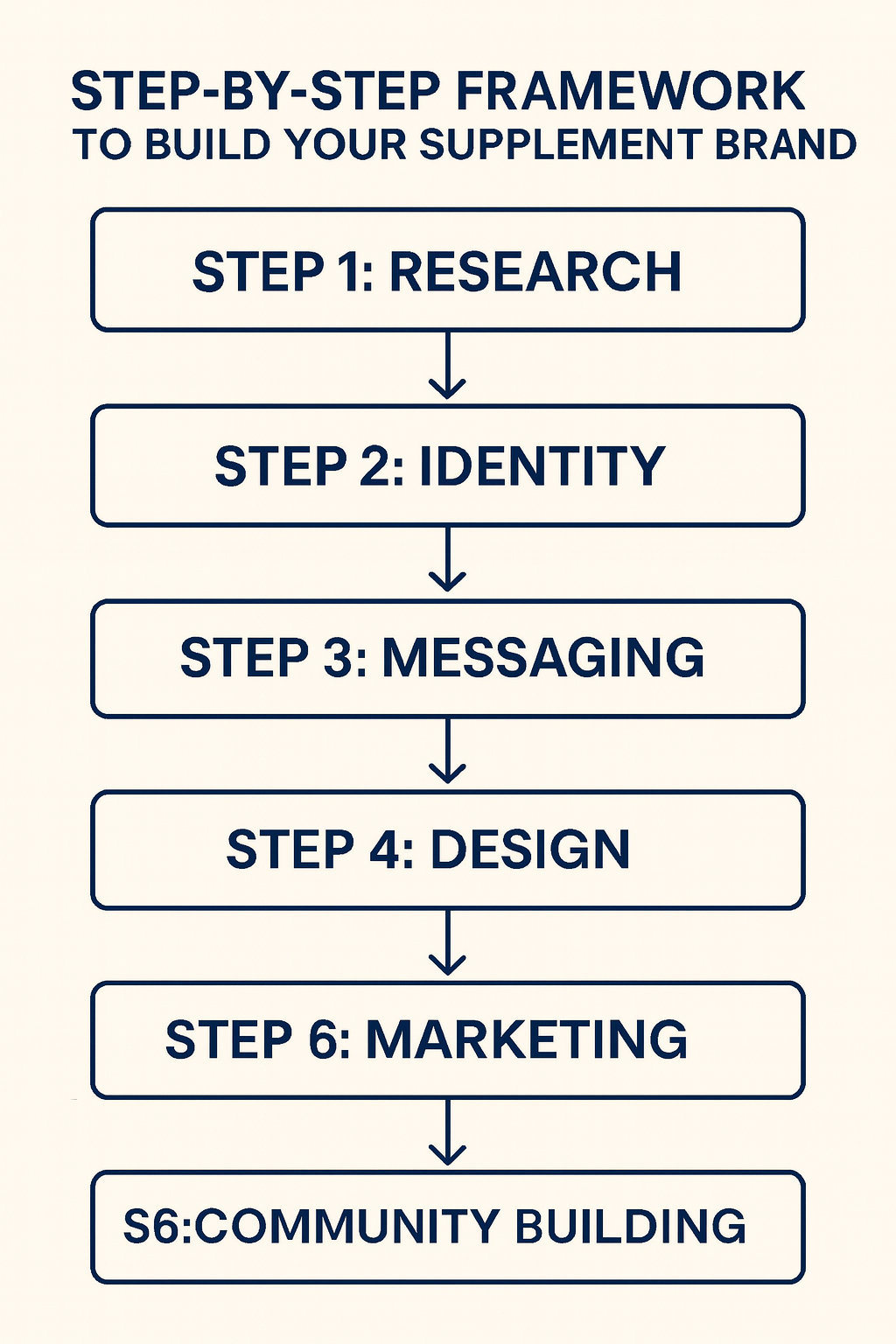
Building a strong supplement brand doesn’t happen overnight. It requires a structured approach that moves from research to community building, with each stage laying the foundation for the next. Here’s the framework:
Step 1: Research
Every successful brand starts with research. Understand the market size, trends, and competitors. Identify gaps where customer needs aren’t being met and analyze how existing brands are positioning themselves. This insight gives you the data to define your opportunity and avoid blending in.
Step 2: Identity
Once you know the landscape, define your identity. Clarify your mission, vision, and values, and decide the personality your brand should project. In supplements, this identity should answer why customers should trust you with their health.
Step 3: Messaging
Your messaging is how you translate identity into words. It should be clear, consistent, and rooted in trust. Avoid vague promises and focus instead on benefits that matter to your audience, explained in simple, credible language.
Step 4: Design
In supplements, design must balance compliance with differentiation. Labels need to present facts, disclaimers, and certifications clearly, while colors, typography, and layout reflect your positioning. Strong design should also stay consistent across packaging, website, and digital channels.
Step 5: Marketing
With your brand ready, amplify it through marketing. Use content, SEO, social media, and influencer partnerships to build visibility. Consistency across these channels ensures customers encounter the same story everywhere they meet you.
Step 6: Community Building
Strong supplement brands don’t just sell products; they build communities. Create touchpoints beyond sales, like loyalty programs, educational resources, user-generated content, or wellness events. Community turns customers into advocates and keeps your brand top of mind.
Building a Supplement Brand That Lasts
Branding is what separates a forgettable supplement from one that earns trust and loyalty. From identity and messaging to packaging, digital presence, and community, every step defines how your brand is seen and whether customers choose you.
If you’re serious about building a brand that lasts, don’t wing it. Partner with experts who can shape your strategy, identity, and rollout from day one.