Most people know Canva as a design tool. Very few study Canva as a brand. Yet that is where some of its biggest lessons lie.
Canva has built one of the strongest branding ecosystems in SaaS, not through massive ad budgets, but through consistency. Its website, social media, events, community, education platform, and product experience all speak the same brand language. Every touchpoint feels connected.
For B2B SaaS brands, that changes how branding should be viewed. It is not just a logo, a website refresh, or a visual identity exercise. It is the system that shapes recognition, trust, and recall at scale.
That’s why, in this blog, we’ll break down how Canva does it and what your brand can learn from it.
Canva’s Branding Strategy Broken Down: Layer by Layer
Here’s how Canva builds brand consistency across every touchpoint and what B2B SaaS brands can learn from its strategy:
1. Website Design and Visual Language
Canva uses different color palettes and visual cues across its website to serve different audiences. Yet the experience still feels cohesive because the core brand language remains consistent throughout.
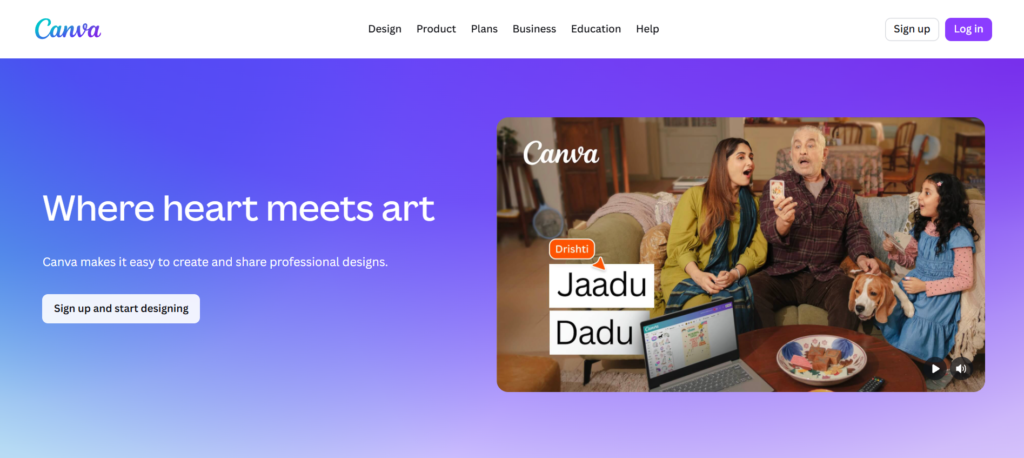
Its rounded corners, soft shapes, and clean layouts are also intentional branding decisions, not just UI trends. They make the platform feel approachable and easy to use, especially for non-designers.
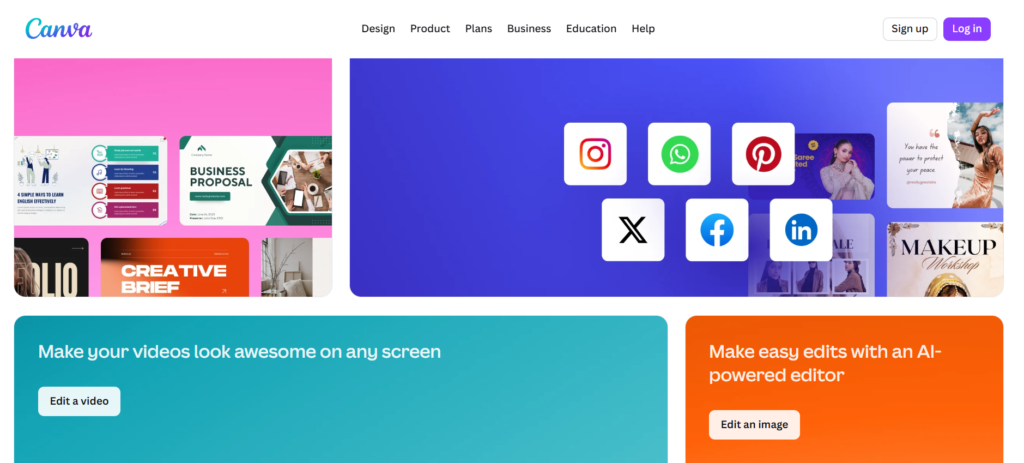
More importantly, the website does not just talk about the product. It demonstrates it. Templates, live previews, and interactive examples allow users to experience the value before signing up.
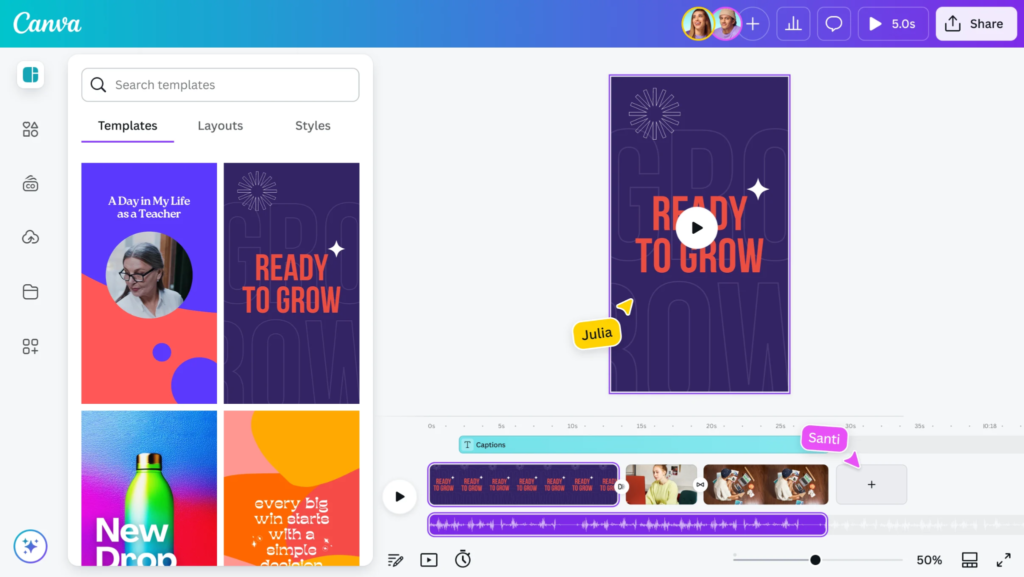
For B2B SaaS brands, that is the bigger lesson. Your website is not just a brochure. It is often the first and most important brand touchpoint. Visual consistency, clear UI personality, and showing the product in action are what make a SaaS brand memorable.
2. Brand Color Consistency Across Channels
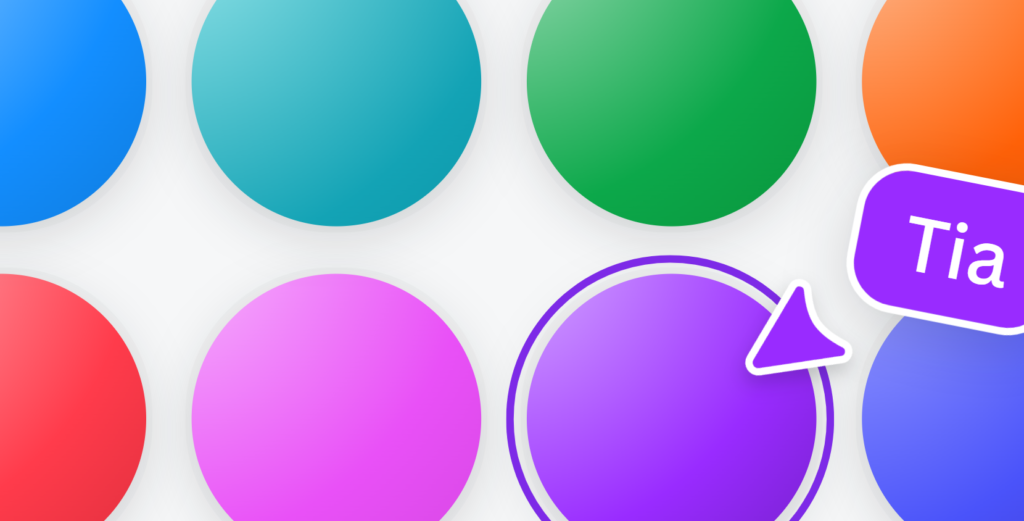
One of the strongest parts of Canva’s branding is how consistently its color system appears across channels. The brand’s multicolored palette shows up everywhere, like paid ads, social media graphics, email campaigns, event branding, presentation decks, and even merchandise.
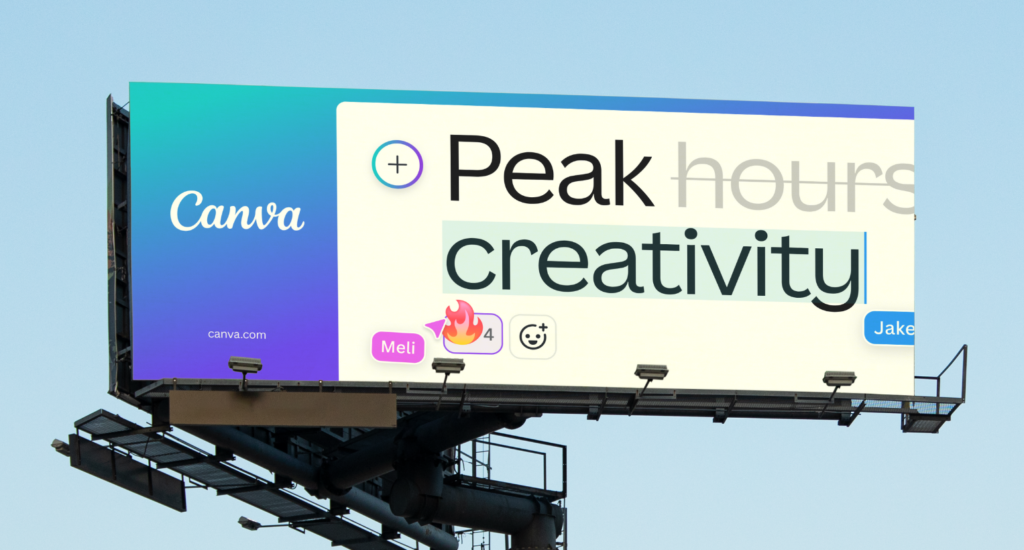
This repetition is deliberate. Every time users see those colors in a different context, brand recognition gets reinforced without Canva needing to mention its name directly. Over time, the visual association becomes automatic.
Canva Create is a strong example of this strategy in action. From stage design and keynote decks to social promotions and attendee experiences, the entire event follows the same visual system. The branding feels unified regardless of the format or channel.
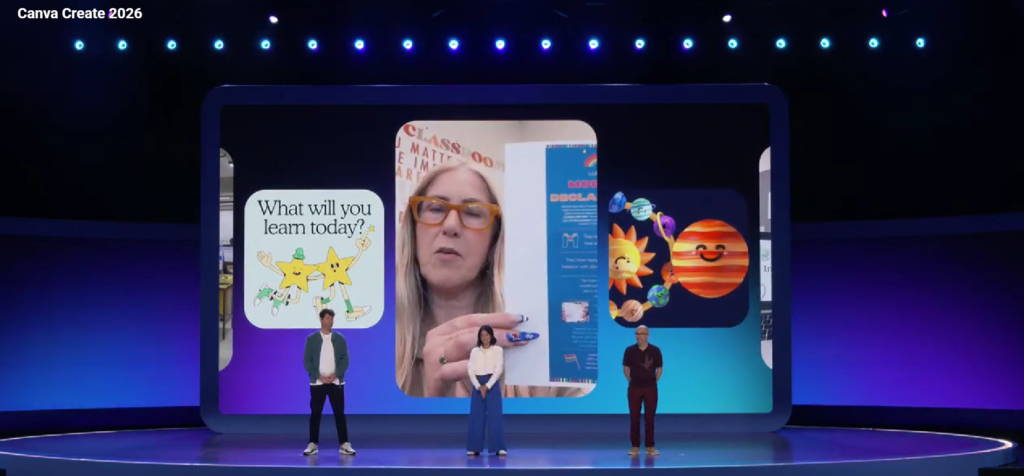
That consistency is what many B2B SaaS brands miss. Brand colors do not create recognition on their own. Recognition comes from repeated exposure across every customer touchpoint.
3. Social Media Presence Across Key Platforms
Canva does not treat every social platform the same. Each channel has a different role, audience, and tone, but the brand still feels consistent throughout. On B2B-focused platforms like LinkedIn, Canva shares thought leadership, product updates, customer stories, and design education. The content feels community-led rather than overly corporate.
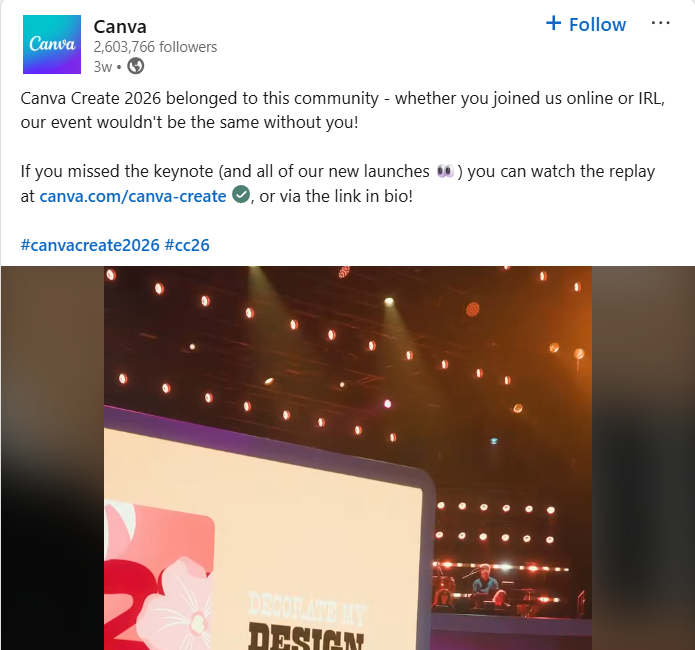
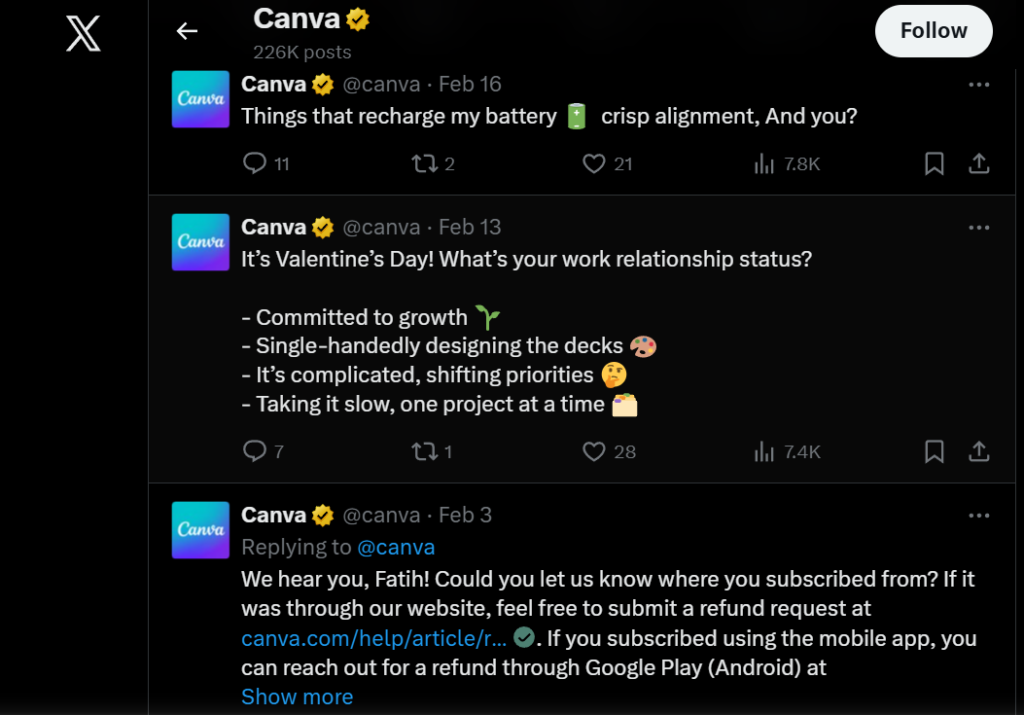
On platforms like X and Instagram, the tone becomes more conversational and visual. Canva uses them to stay culturally relevant, showcase creativity, and feature user-generated content.
Meanwhile, YouTube is used for tutorials, walkthroughs, and long-form storytelling content that builds deeper engagement.
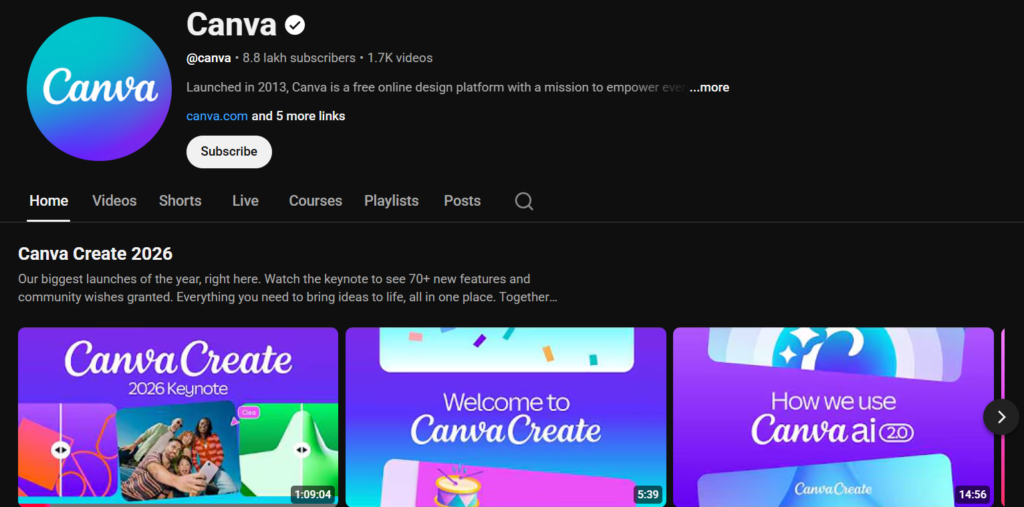
The key difference is that Canva adapts content for each platform rather than reposting the same message everywhere. Different format, same brand experience.
4. Online and In-Person Events Strategy
While Canva Create is Canva’s biggest brand event, the broader strategy goes far beyond a single annual conference. Canva regularly hosts community meetups, educator sessions, nonprofit webinars, creative workshops, and networking events across both online and in-person formats.
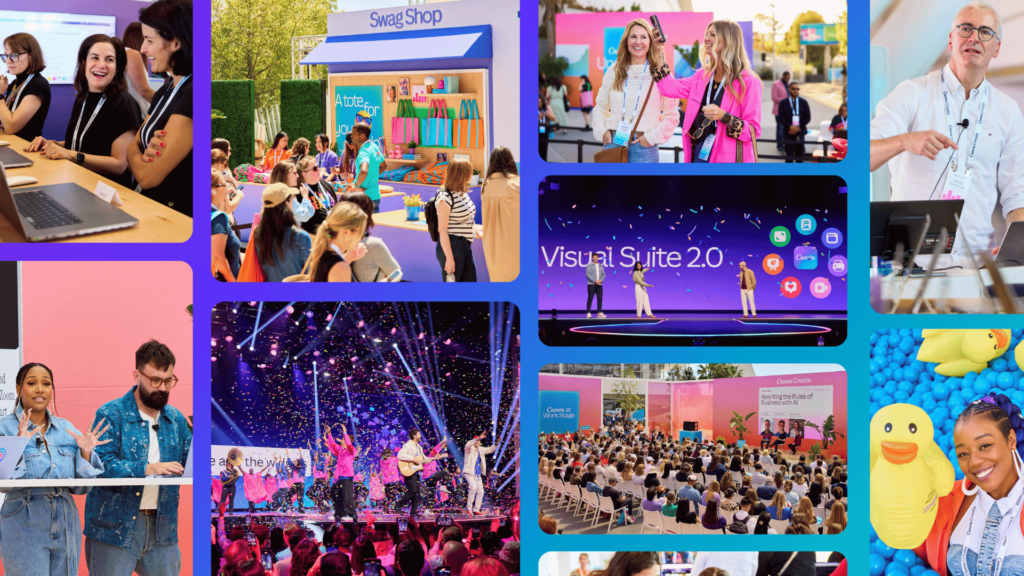
What makes these events effective is how audience-specific they are. Canva creates different experiences for educators, creators, marketers, nonprofits, and enterprise teams instead of pushing the same event format to everyone. Yet despite the different audiences, the branding always feels cohesive. The same visual identity, tone, and accessibility carry across every interaction.
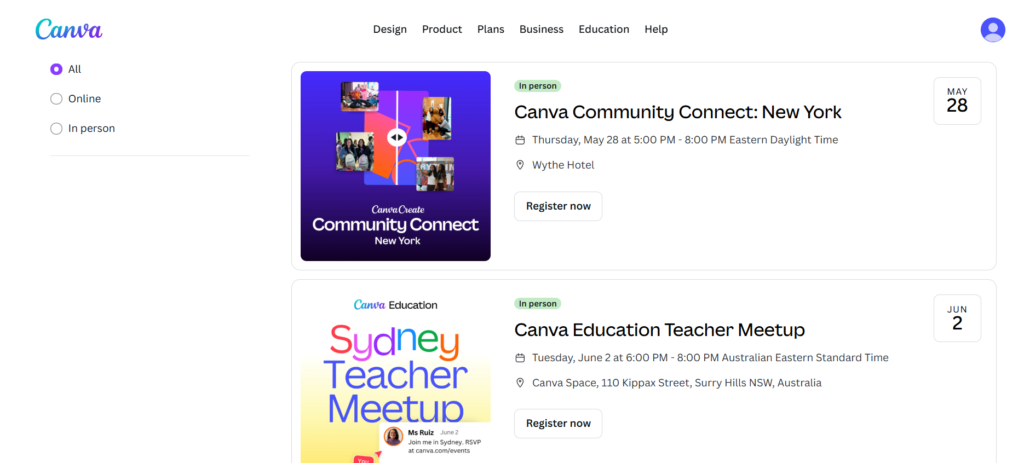
More importantly, the events are not treated as one-off lead-generation campaigns. They act as recurring brand touchpoints that strengthen familiarity, community, and trust over time. That long-term consistency is what turns events into part of the brand ecosystem instead of just another marketing activity.
5. Newsroom as a Brand Narrative Tool
Canva uses its newsroom as more than a place for company announcements. It acts as a central hub for product launches, feature updates, company culture stories, industry commentary, and social impact initiatives.
That approach gives Canva more control over how the brand is perceived. Instead of relying only on press coverage or social media conversations, the company actively publishes its own perspective, priorities, and narrative.
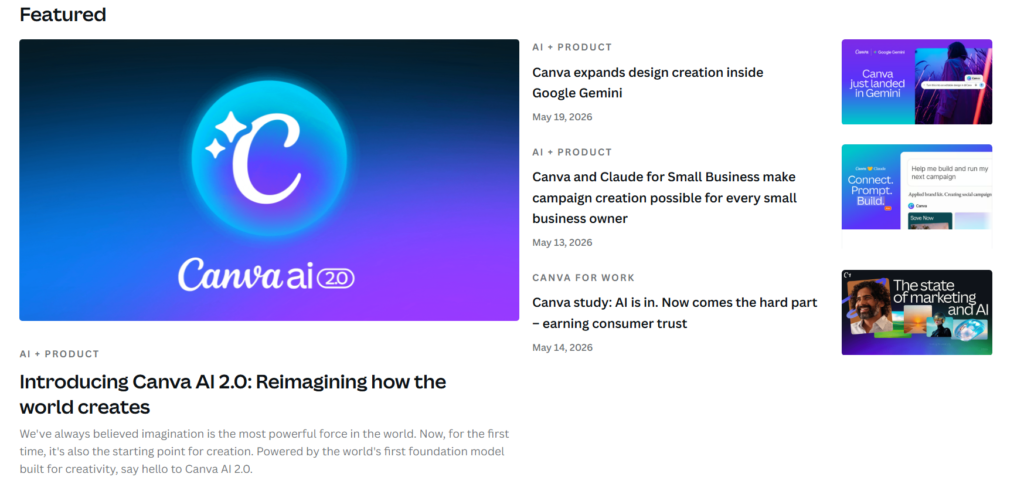
The newsroom also expands the brand beyond the product itself. Stories around sustainability, community programs, and team culture make the company feel more human and relatable, helping build emotional connection alongside product awareness.
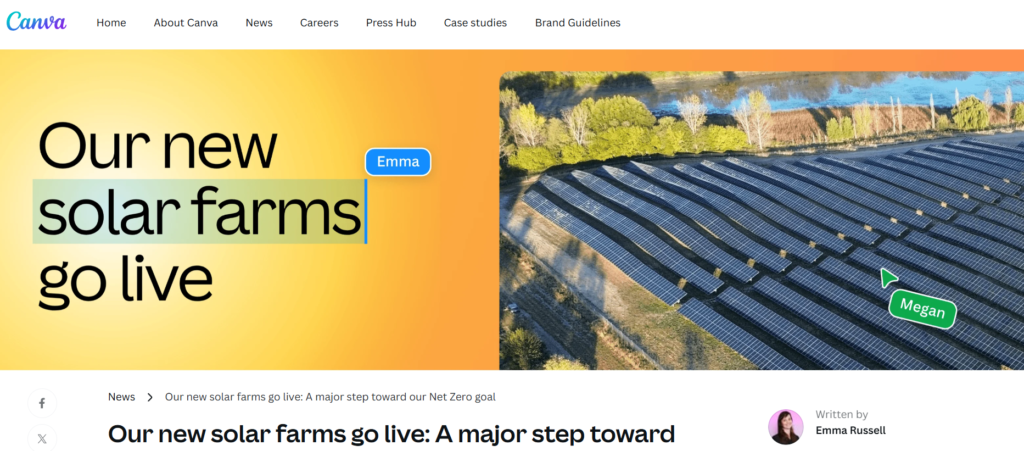
For many B2B SaaS brands, this is the missing layer. If your story only exists through journalists, customer reviews, or third-party platforms, you are leaving your brand narrative in someone else’s hands.
6. Community Building as a Brand Moat
One of Canva’s biggest branding advantages comes from its community. A large part of Canva’s massive template ecosystem has been created by users themselves, not just the internal team.
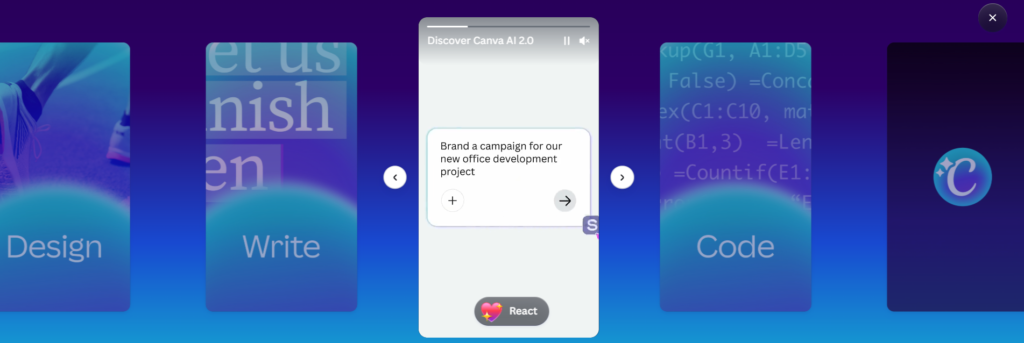
That creates a powerful network effect. More templates attract more users, more users contribute more designs, and the product becomes increasingly valuable over time. Eventually, Canva stops feeling like just a software tool and becomes closely tied to how people create and share designs online.
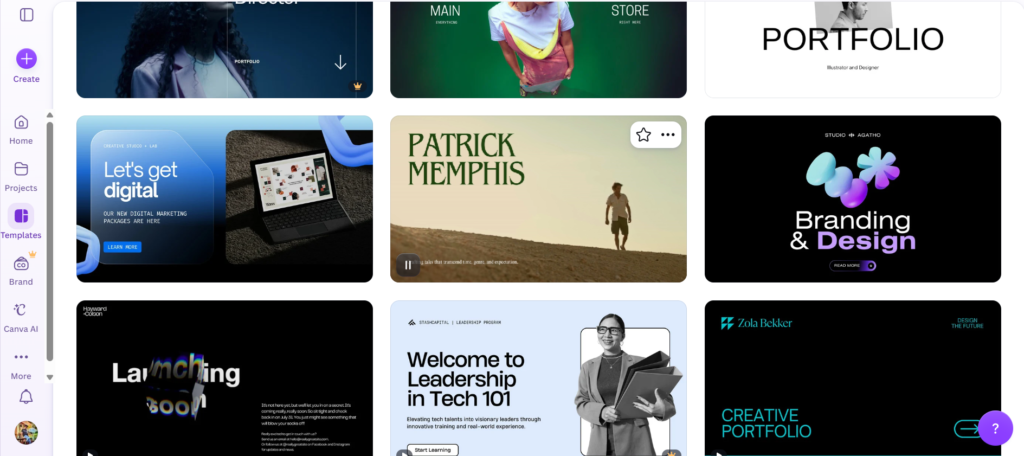
The same effect extends across social media. User-generated posts, templates, tutorials, and shared designs constantly distribute the Canva brand organically across platforms. That kind of visibility is difficult to replicate through paid campaigns alone.

This is what makes community such a strong long-term advantage. When users actively build, share, and advocate for your product in public, the brand starts growing beyond the marketing team itself.
7. Prompted Podcast as Brand Philosophy
Prompted, hosted by Cameron Adams, is built around conversations on AI, creativity, storytelling, and the future of work. Importantly, it is not a product podcast. It rarely talks about Canva features or product launches.
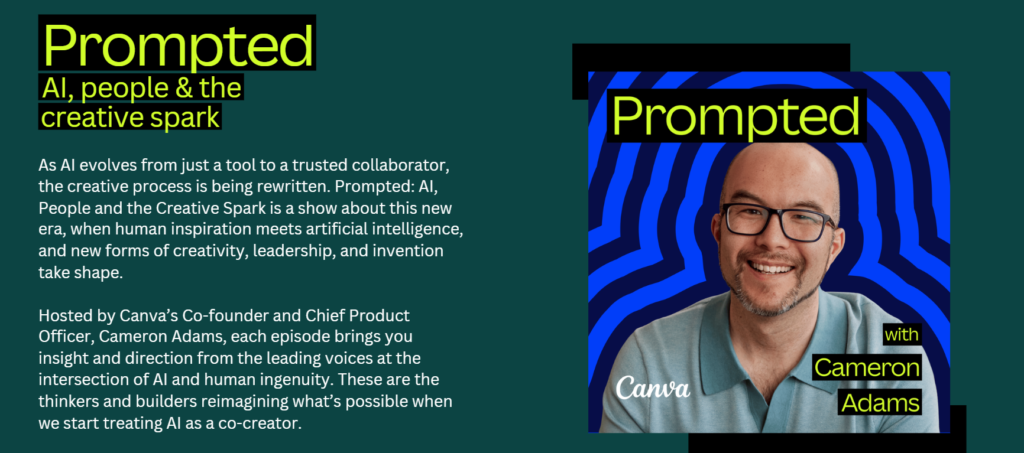
That is what makes it a strong branding move. Instead of positioning itself solely as a design tool, Canva positions itself as a company shaping broader conversations about creativity and technology. The podcast gives the brand intellectual presence beyond the product itself.
Because the show distributes across platforms like Spotify, Apple Podcasts, and YouTube, Canva’s brand voice reaches audiences who may never have searched for design software directly. The content builds awareness and familiarity long before purchase intent exists.
That is an important distinction for B2B SaaS brands. A podcast does not need to promote product features constantly to create business value. What matters is whether the content consistently reflects the brand’s perspective, expertise, and way of thinking. Over time, that shapes perception and trust at the top of the funnel.
8. Design School as a Brand Retention Strategy
Canva’s Design School is more than a support resource. It is a learning platform offering tutorials, certifications, and self-paced courses around design, storytelling, and Canva’s AI tools.
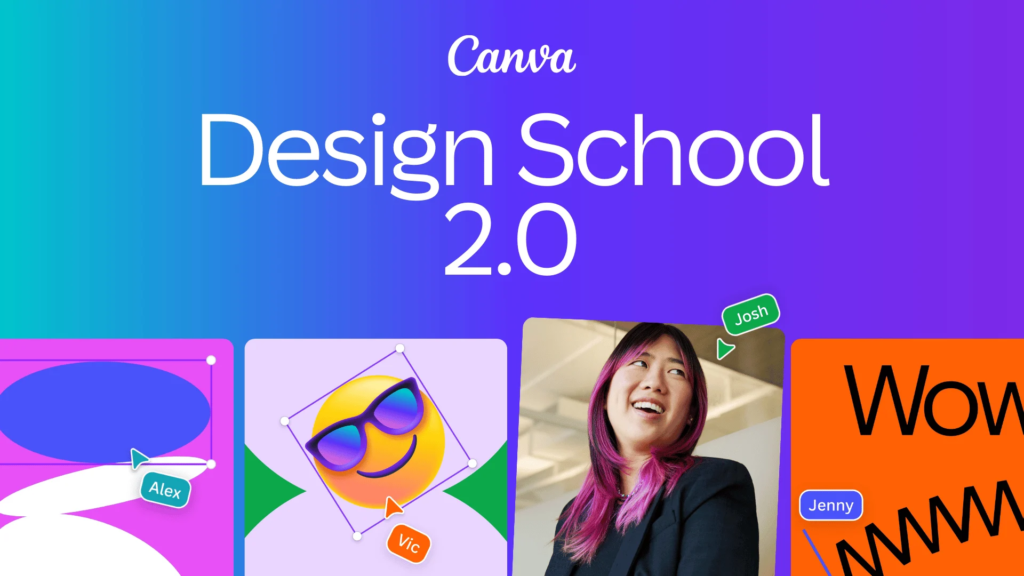
The certification angle is especially smart from a branding perspective. When users add Canva certificates to their LinkedIn profiles, the brand gains organic visibility across recruiters, employers, and professional networks without paying for distribution.
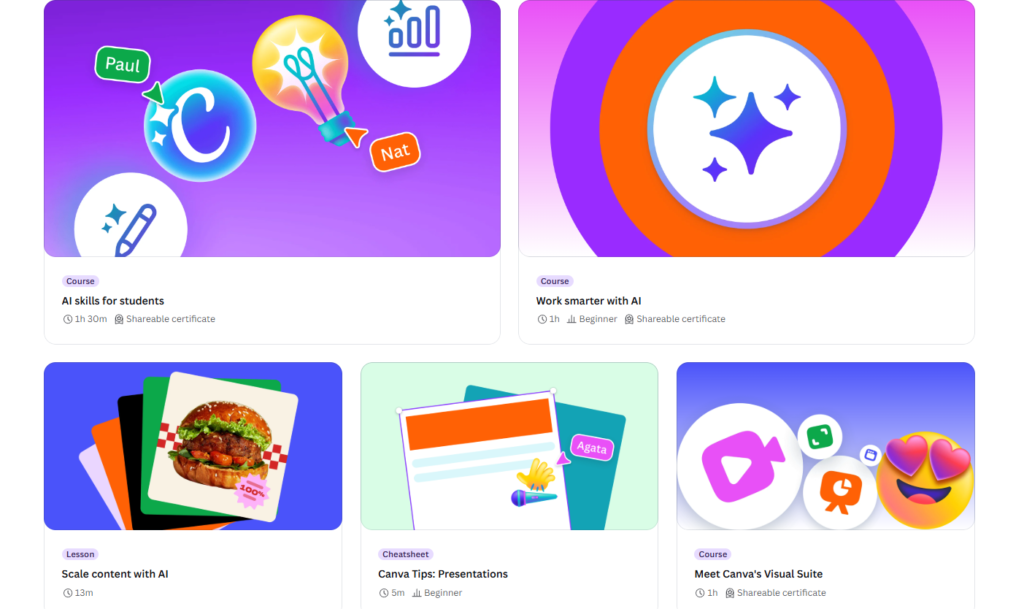
Design School also strengthens long-term product adoption. As users learn design workflows through Canva itself, the platform becomes embedded into how they work creatively. That builds stronger retention and familiarity over time.
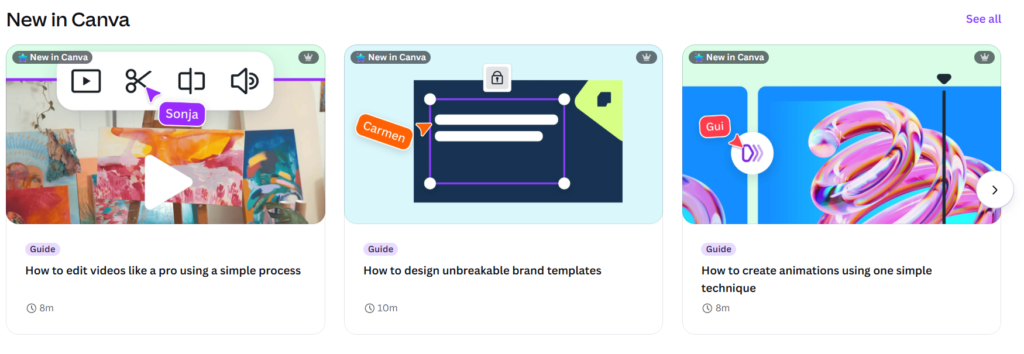
Available in multiple languages, the platform functions as a global brand-building engine, not just a learning feature. It is a reminder that education can be one of the strongest growth and branding levers for B2B SaaS companies.
Conclusion
Canva did not just build a brand. It built a complete brand ecosystem. The logo and colors are only the surface layer. Underneath is a connected system of community, education, content, events, and storytelling, each reinforcing the other.
For B2B SaaS brands, the takeaway is not to copy Canva’s tactics individually, but to think in systems. Branding compounds when every touchpoint works together consistently over time.
At The Brand Strategy Labs, we have over a decade of experience helping SaaS brands build positioning, visibility, and brand ecosystems that scale.