
Branding isn’t just for big businesses. For online coaches and consultants, your brand is your business. In a fast-growing and increasingly crowded space, the way you present yourself determines whether people trust you or scroll past.
In this guide, we’ll walk you through the essentials of building a brand that reflects your value, attracts your ideal clients, and grows your coaching or consulting business sustainably.
Why Branding Is Crucial for Online Coaches and Consultants in 2026
In a space overflowing with mindset mentors, business coaches, health consultants, and life guides, branding is a must-have.
1. Clients buy you before your service
In the coaching and consulting world, trust is currency. And clients don’t invest in your packages or PDFs first. They invest in you.
Your brand is what helps someone feel seen, understood, and confident before a single session begins. When your visuals, tone, and messaging feel aligned and intentional, they communicate credibility, warmth, and trust.
2. Branding helps establish authority, clarity, and premium positioning
A strong brand signals that you know your niche. Your website, content, and communication become proof of your clarity and expertise.
Instead of competing on price, you position yourself as the go-to in your space. That’s why clients happily pay more for someone like Kusha Kapila as a creative consultant or Ramit Sethi as a financial coach. Their brands speak authority.
3. Differentiation is your superpower
There are thousands of wellness coaches, productivity experts, and business mentors online. But how many sound like you? Look like you? Share your worldview? Branding helps you stand out not by being louder, but by being sharper.
When your messaging, aesthetics, and voice align with your values and client desires, you naturally stand out.
4. Branding as a magnet
Not every client is your client and branding helps you attract the right ones.
When you lead with your brand’s values and personality, it acts like a filter. You repel mismatches and draw in people who vibe with your approach. For example, if you’re a no-fluff, strategy-first business coach, your branding should reflect that through sharp language, bold visuals, and focused messaging.
Strong branding ensures you spend less time convincing and more time converting. Clients arrive already resonating with your story and energy.
Start with Clarity: Define Your Coaching Brand Foundation
Branding isn’t what you look like; it’s what you stand for. And the strongest coaching brands are built on a crystal-clear foundation.
1. What’s your niche or specialization?
It’s tempting to say “I help everyone,” but that’s the fastest way to get ignored. Specificity sells.
Your niche should answer: Who do you serve? What problem do you solve?
Are you a wellness coach for working mothers dealing with burnout? A career strategist for mid-level women in tech? Or a mindset coach for Gen Z creatives with ADHD?
The more precise your niche, the easier it is to build brand assets and messaging that connect.

2. Define your mission, vision, and purpose
Your mission is what you do.
Your vision is what world you’re trying to help build.
Your purpose is why you do it.
You don’t need to put this on your homepage word-for-word. But it will shape everything from your voice to your offerings.
3. Outline your brand values
Your values guide how you show up and what kind of clients you attract. Values like integrity, transformation, or empathy create alignment with clients.
When your content reflects your values, it builds emotional trust. For instance, a coach who values “radical transparency” might post revenue numbers, behind-the-scenes struggles, or call out industry fluff.
4. Develop your brand positioning statement
Summarize your value in one line: “I help [X people] achieve [Y result] through [Z method].” This isn’t just for bios. It’s the foundation of all messaging.
Examples:
- “I help mid-career women in finance break free from burnout and build a joyful second career—through practical mindset coaching and strategic planning.”
- “I help spiritual entrepreneurs grow their income without compromising their energy—by combining intuitive coaching with business systems.”
Discover and Own Your Unique Brand Voice
If your brand was a person, how would it speak? Would it be calm and nurturing, or bold and no-nonsense? That’s your brand voice. For online coaches and consultants, it’s one of your most powerful trust builders.
1. Identify your tone
Your tone sets the emotional atmosphere. It tells your audience how they’ll feel when they work with you.
Some examples:
- Inspiring and warm: Great for mindset or wellness coaches.
- Clear and directive: Ideal for business or strategy-focused coaching.
- Edgy and rebellious: Works well for disruptor-style brands targeting creatives or misfits.
- Calm and therapeutic: Suited for trauma-informed or emotional healing coaches.
2. Let your personality shine
Your quirks, language patterns, and humor are not distractions, they are your brand. The trick is to make them feel intentional, not random. If you have a signature way of simplifying complex topics, lean into it.
But always balance personality with audience fit. A Gen Z coach can be more casual and meme-friendly, while a high-ticket executive coach might need a more polished tone with flashes of wit.
3. Voice consistency is non-negotiable
Your brand voice shouldn’t switch personalities between your website, Instagram, sales page, and coaching calls.
Whether someone hears from you in a DM, reads your weekly newsletter, or opens your digital course workbook, they should be consistent.
Quick audit:
- Is your email tone aligned with your Instagram captions?
- Does your course content sound like your free content?
- Would someone reading your blog instantly know it’s yours?
4. Develop your signature language
Signature phrases, frameworks, or metaphors make you memorable.
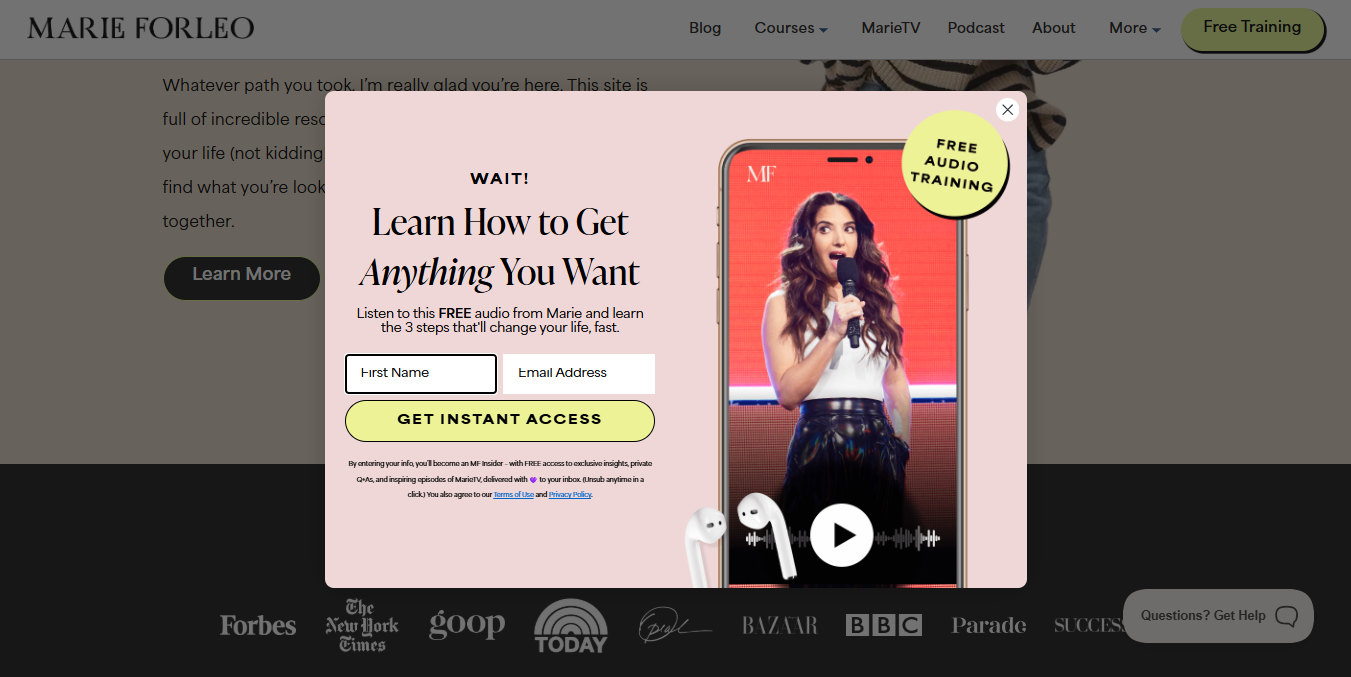
Think of Marie Forleo’s “Everything is figure-outable” or Lisa Nichols’ “You are your rescue.”
These become mental shortcuts that your audience associates with your brand and eventually repeats back to you.
Know Your Ideal Client Deeply
Your brand is not for everyone—and that’s a good thing. The strongest coaching brands speak directly to a specific person, with a specific struggle, on a specific path.
1. Define your ideal client profile
Start with the basics:
- Demographics: Age, gender, profession, income bracket, education.
- Psychographics: Beliefs, values, routines, and habits.
- Current context: Where are they in life right now? What’s frustrating them?
The clearer you are, the clearer your content becomes.
A real-life parallel: Saloni Srivastava, an Indian creator and coach, speaks directly to early-stage female solopreneurs who are navigating both money and mindset challenges. Her content isn’t generic. It’s designed for that exact group.
2. Map their transformation journey
Great branding tells a story – starting where your client is and ending where they want to be.
Ask yourself:
- What’s their current reality?
- What does their desired future look like?
- What’s stopping them from getting there?
Your job is to build a brand that bridges that gap by showing them you’ve helped others cross it too.
3. Understand their objections and doubts
Why might they hesitate to work with you?
- “Will this actually work for me?”
- “Is this coach too expensive?”
- “Can I trust them with my personal struggles?”
You need to address these doubts proactively in your brand content:
- Show testimonials that match their story
- Offer bite-sized wins in your free content
- Talk about your process in a way that feels transparent and safe
4. Speak to their emotions, not just logic
Logic informs, but emotion converts.
When you write Instagram captions, record podcasts, or create lead magnets use language that mirrors their internal dialogue. Instead of saying: “I’ll help you build a 3-month wellness routine,” try, “No more starting strong on Monday and burning out by Friday.”
When your brand reflects your ideal client’s inner world better than they can express it themselves, you win trust fast.
Crafting a Magnetic Brand Message
Once you know who you serve and how, they need to know it too. A magnetic brand message doesn’t just inform. It pulls. It makes your ideal client pause, nod, and think, “That’s me. I need this.” This is where clarity meets emotional resonance.
1. Create a strong tagline or elevator pitch
Start with clarity. Your tagline or elevator pitch should instantly tell someone what you do and who it’s for. Think: “I help mid-career professionals land leadership roles without burnout,” or “Helping busy founders build systems that scale.” These are sharp, outcome-driven, and emotionally resonant. That’s the goal.
2. Clarify your method or framework
People trust processes. If you’ve developed your own framework, even informally, it’s part of your brand. Give it a name. Even something simple like the “ALIGN Framework” builds authority. Create visuals around it. Let it anchor your client journey.
This builds perceived expertise and helps potential clients visualize what working with you looks like.
3. Show transformation
Don’t just sell coaching packages. Sell the change your clients go through. Instead of listing “6 sessions over Zoom,” talk about how your client moves from anxiety to clarity, from undercharging to confidently raising rates, from feeling stuck to finally taking action. People buy results, not session counts. Real stories and emotional language make your brand memorable.
4. Tell stories
Your story matters. Why did you start coaching? What turning point pushed you here? What made you realize this is the work you’re meant to do?
A few storytelling formats you can use:
- Your own transformation (especially if you were once in your client’s shoes)
- Client success journeys (with their permission)
- Behind-the-scenes moments (doubt, wins, tough choices)
People remember stories more than sales pages. And they convert emotionally, not logically.
Visual Branding That Matches Your Personality and Promise
Your visual brand is often the first impression, and in coaching, that impression needs to feel both personal and professional. Great design doesn’t just look good. It builds trust and communicates energy.
1. Choose brand colors intentionally
Your brand colors should reflect your coaching style. Soft neutrals suggest calm and support. Vibrant colors bring energy and motivation. Earthy palettes often align with wellness and authenticity. It should feel intentional and align with your message. Use tools like Coolors or Pinterest to test palettes.
2. Typography matters
Typography matters more than you think. Bold, all-caps fonts feel assertive. Rounded, minimal fonts create warmth. Elegant serifs add sophistication. The goal is consistency. Your font should feel like an extension of your voice. Avoid using too many styles. One primary and one accent font is usually enough.
3. Designing a logo
Your logo doesn’t have to be complex. In fact, simple logos often perform best, especially when your face is the real brand. If you’re using your name, a custom monogram or a subtle icon is enough. Don’t overthink it but do make sure it’s readable across platforms.
4. DIY or designer?
If you’re just starting out, DIY tools like Canva can go a long way. But as your business grows, investing in a designer can help elevate your brand and save time in the long run. A pro can create a visual identity that feels more cohesive, strategic, and scalable. Think of it this way: when your brand starts looking like your pricing, clients trust you faster.
Your Website: The Digital Home of Your Brand
For online coaches and consultants, your website isn’t just a portfolio, it’s your handshake, your elevator pitch, and your virtual office, all in one place. A strong branded website helps you show up with clarity, confidence, and credibility.
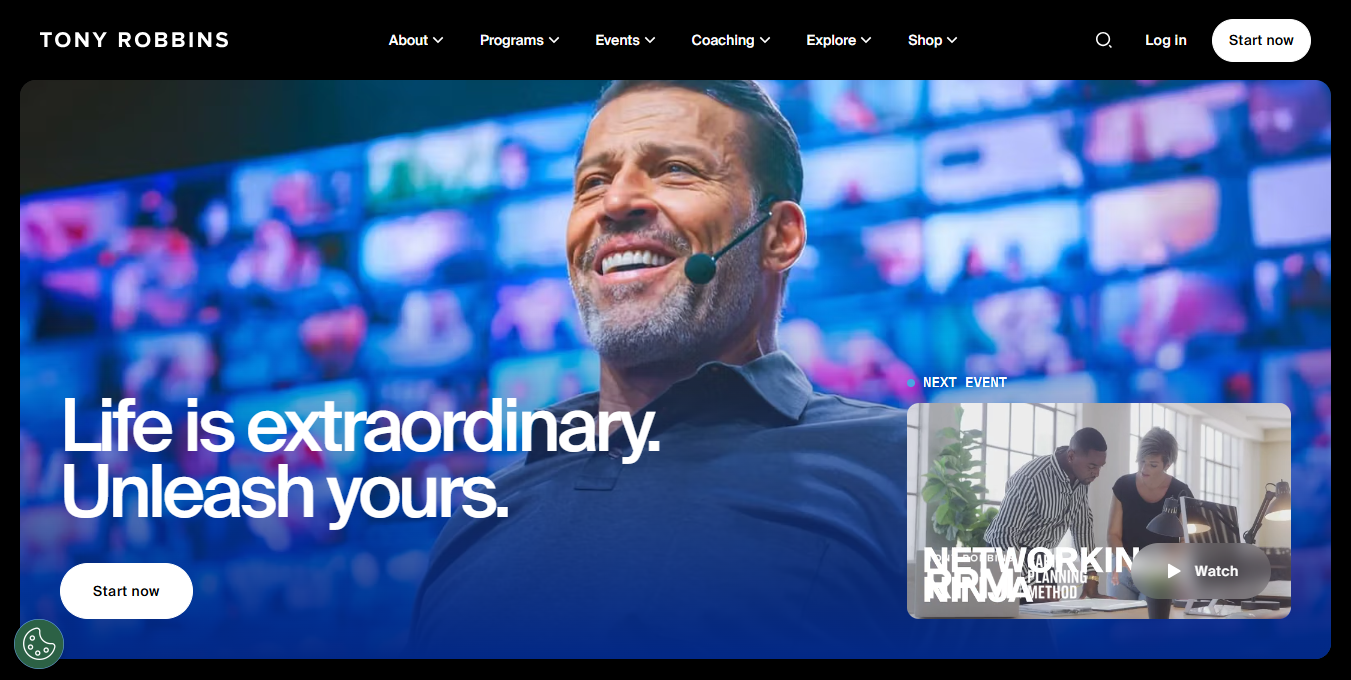
- Start with structure: Your homepage should make it instantly clear who you help and how. From there, lead visitors to your About page (your story), Services (what you offer), and Testimonials (proof it works).
- Website copy should reflect your brand voice: Whether you’re bold and direct or calm and thoughtful, let your tone flow through every word. Keep it simple, conversational, and benefit-focused.
- Visuals matter: Ditch the generic stock images and invest in brand photography. You just need a few lifestyle shots that show you in your element. Whether you’re journaling, coaching, or sipping coffee, let your audience see the real you.
- Include trust signals: Display your credentials, certifications, press mentions, and past client-wins prominently. The more proof you offer, the more confident your audience will feel about reaching out.
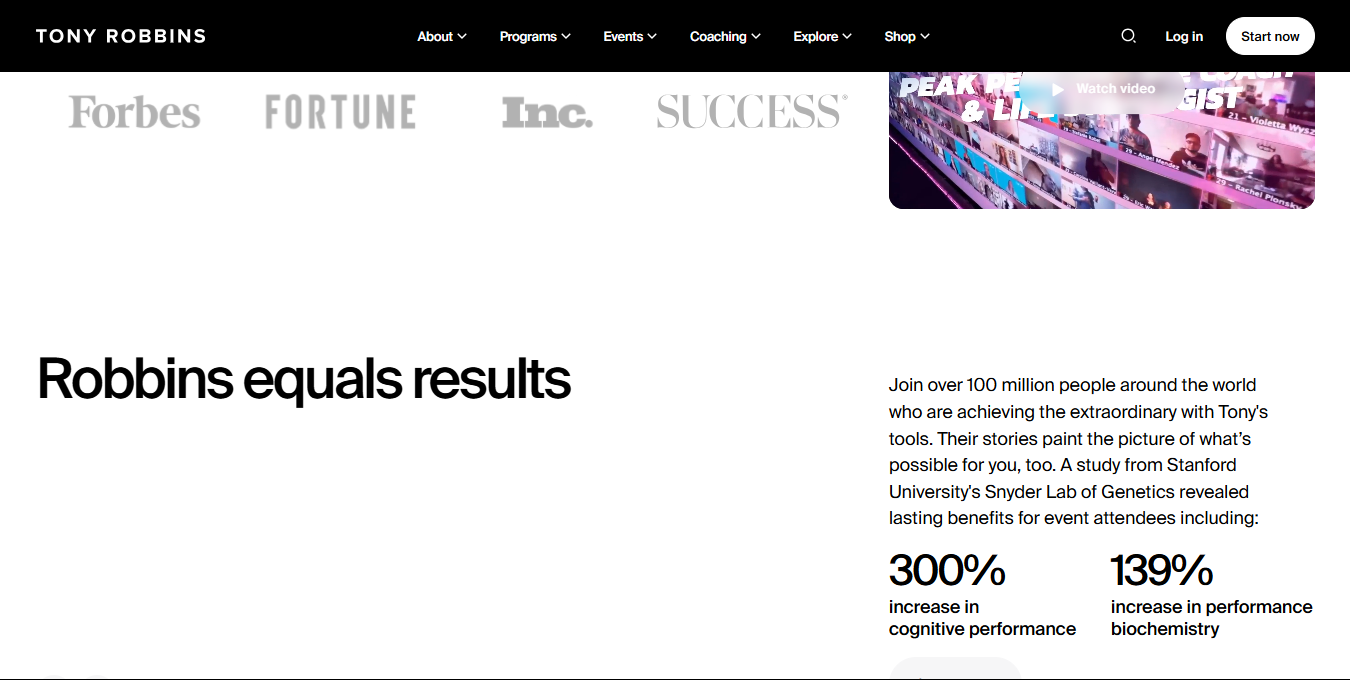
These cues nudge browsers to believe, “This person knows their stuff.”
Social Media & Content Strategy for Brand Growth
For online coaches and consultants, social media is where first impressions are made—and trust is built over time. But the goal isn’t to be everywhere. It’s to show up consistently where your ideal clients already are.
- Start by choosing the right platform: If you work with professionals or B2B clients, LinkedIn might be your best bet. For wellness, mindset, or lifestyle coaches, Instagram and YouTube offer a more visual, personal connection. Pick 1–2 channels you can genuinely commit to and go deep.
- Your content should reinforce your brand promise: But the real magic? Letting people see you. Behind-the-scenes moments, personal wins, and client shoutouts help humanize your brand.
- Keep visuals consistent: Use the same color palette, fonts, and tone of voice across posts, reels, carousels, and videos. This builds recognition and strengthens your identity over time.
- Content format matters: Some coaches thrive in reels, others in podcasts or long-form captions. Choose what aligns with your energy and audience expectations.
Social media isn’t just about promotion. It’s a branding tool.
Email Branding: The Hidden Gem
Email often gets overlooked in favor of flashy platforms. But for online coaches and consultants, it’s where real relationships are built. Done right, your emails feel like a direct line to your brand.
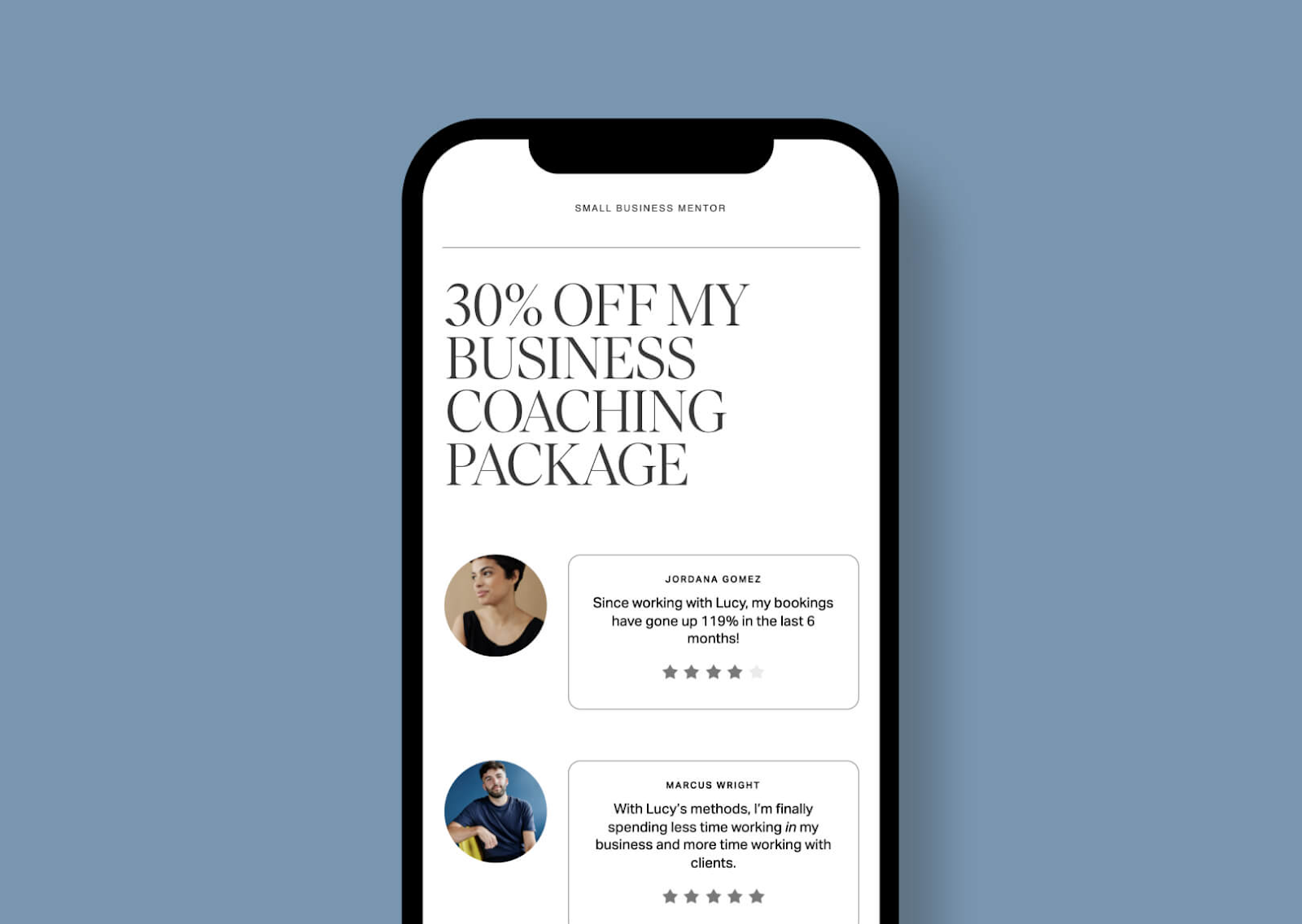
- Match your voice: Your email should feel like an extension of your brand. No stiff intros. Keep it warm and conversational.
- Tell great stories: Talk about client wins, your mistakes, your “aha” moments. That’s how you build loyalty.
- Make it look like your brand: Use consistent colors, fonts, even sign-offs. Tools like Flodesk make this easy.
- Grow your list with aligned freebies: Offer checklists, templates, or masterclasses that tie back to your brand promise.
Whether it’s a mindset shift, a practical tool, or a client win, every email should feel like a small gift rather than a broadcast. Over time, that trust compounds.
Client Experience as Brand Expression
Your brand isn’t just what people see, it’s how they feel after working with you. From the moment someone books a session to the last follow-up email, every touchpoint reflects your brand.
- Onboarding matters: Send branded welcome kits, onboarding emails, and a clear roadmap. It’s part of your first impression.
- During sessions: Does your coaching style reflect your brand voice? A bold brand shouldn’t be overly passive in delivery.
- Offboarding = opportunity: Ask for feedback. Offer next steps. Send a branded thank-you. Create a moment that ends strong.
Great branding doesn’t end at the sale. For coaches and consultants, it lives in the experience.
Personal vs. Professional Branding Balance
When you’re a coach or consultant, you are the brand. But should your brand be built around your name—or something bigger? That depends on your goals.
1. Should your brand use your name?
Branding under your own name builds instant trust. It feels personal, approachable, and authentic. But if you dream of launching digital products, building a team, or scaling your offers, a studio-style name gives you more room to grow. Choose based on where you’re headed—not just where you are.
2. Pros and cons of personal branding
Using your name helps people remember and connect with you faster. It builds visibility, especially on social media. But it also means the business revolves around you, making it harder to take a break, delegate, or eventually exit. If long-term scale is the goal, think ahead.
3. Mixing personality with professionalism
Showing up as “you” doesn’t mean sharing everything. It’s about intentional vulnerability. You can talk about your journey, values, and mindset. The goal is to feel real and trustworthy, not overly polished or overly personal. A little humanity goes a long way in building connection.
Common Branding Mistakes Coaches Make
- Inconsistent tone and visuals: Your Instagram sounds playful. Your website sounds stiff. Fix that.
- Generic messaging: “Helping people thrive” isn’t clear. “Helping anxious freelancers build mindful routines” is.
- Copying other coaches: Steal strategy, not identity. Clients want you, not your version of someone else.
- Ignoring design: You don’t need fancy branding. But visuals matter. Even basic alignment builds trust.
- Forgetting the experience: Your brand isn’t just a logo. It’s how people feel after talking to you.
Signs Your DIY Branding Is Holding You Back
Sometimes, it’s not about what’s missing. It’s about what’s not working. Here’s how to know if your current branding is quietly costing you growth:
- You’re attracting the wrong clients (or none at all).
- Your Instagram looks nothing like your website.
- You fumble when someone asks, “So what exactly do you do?”
Conclusion
Great branding isn’t just about looking polished. It’s about making people feel something – clarity, trust, connection.
Whether you’re just launching or trying to scale, brand strategy is your secret growth lever.
Ready to build a brand that reflects your value and connects deeply with your audience?
Book a free discovery call or check out our portfolio to see how we help coaches like you scale with clarity.