Most people explain Zoom’s success through product-market fit, a strong user experience, and the pandemic-driven shift to remote work.
Those factors certainly fueled its growth.
But they don’t fully explain why Zoom became the default name for video meetings or why people started saying “Let’s Zoom” regardless of the platform they were using.
Today, Zoom generates more than $4.8 billion in annual revenue and serves organizations worldwide. That kind of scale requires more than a great product. It requires a brand that buyers recognize and trust.
That’s why Zoom’s branding strategy is worth studying. In this blog, we’ll break down its brand strategy and the lessons B2B SaaS companies can apply to build stronger brands and lasting category recognition.
Breaking Down Zoom’s Branding Strategy
Here are 10 branding decisions that made Zoom impossible to ignore:
1. Zoom Owns a Single, Clear Brand Promise: Simplicity
At the core of Zoom’s brand is a simple promise: make communication easy.
That promise shows up across the entire experience. The brand name is short and memorable. Onboarding is designed to get users into a meeting quickly. Even the product names follow the same logic:
- Zoom Meetings
- Zoom Phone
- Zoom Rooms

Every decision reduces friction and makes the platform easier to understand. As a result, buyers immediately understand what Zoom offers and how it fits their needs.

This is where many B2B SaaS companies struggle. They try to communicate ease of use, flexibility, security, scalability, and innovation all at once. Buyers rarely remember any of it. The lesson isn’t that simplicity should be your brand promise. It’s that strong brands choose one core promise and reinforce it consistently across every touchpoint.
2. Their Brand Identity Prioritizes Recognition Over Creativity
Zoom’s visual identity is remarkably simple. The blue color palette, clean typography, uncluttered interface, and straightforward iconography all reinforce the same feeling.

Even the product itself avoids unnecessary visual complexity.

That’s intentional. Zoom isn’t trying to impress buyers with bold design choices or creative branding. Instead, it aims to feel familiar and approachable from the first interaction. Whether someone is joining a meeting, browsing the website, or exploring a new product, the experience feels consistent.

There’s an important lesson here for B2B SaaS brands. Buyers don’t reward creativity for its own sake. They reward brands they recognize and trust. In many cases, consistency across every touchpoint creates more value than originality.
3. Zoom Evolved from a Product Brand to a Platform Brand
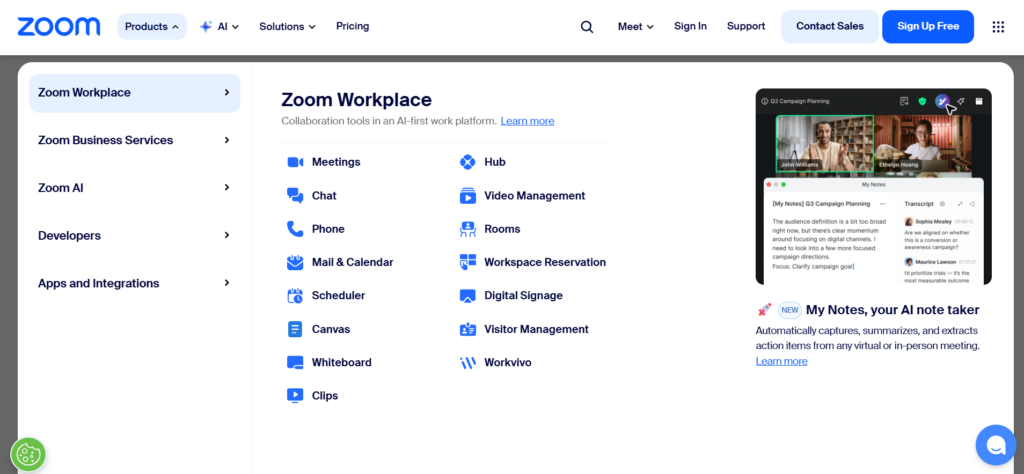
Zoom started as a video meetings tool in 2013. Today, its portfolio spans Meetings, Phone, Rooms, Team Chat, Contact Center, Events, Whiteboard, AI Companion, and more.
What’s notable is that Zoom expanded into all these areas without rebuilding its brand. Each new product fits naturally under the Zoom umbrella, allowing the company to grow while retaining the trust and recognition it had already earned.
For SaaS companies, this highlights the importance of brand architecture. Brands built around a single feature often limit future growth. Zoom built a brand that could expand into new categories without losing relevance or creating confusion.
4. Their Messaging Focuses on Outcomes, Not Features
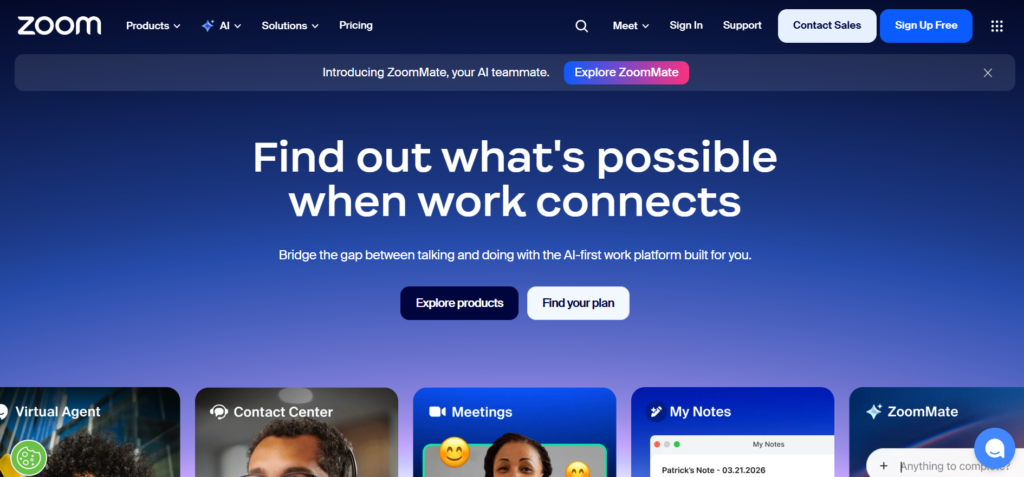
Visit Zoom’s homepage, and you’ll notice that the company rarely leads with technical specifications or feature lists. Instead, the messaging focuses on connection, collaboration, communication, and productivity.
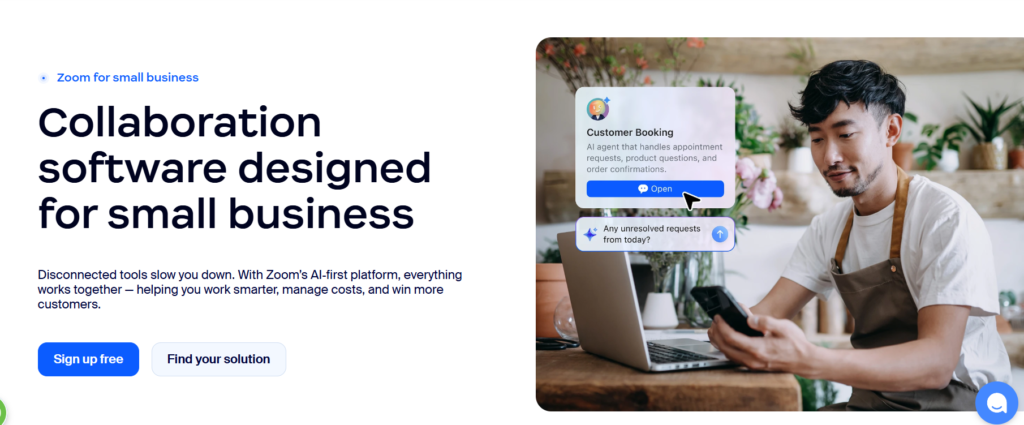
That’s intentional. Buyers aren’t looking for software features. They’re looking to solve problems and achieve outcomes. Zoom keeps the conversation focused on those outcomes and uses features to support the story.
Many SaaS brands do the opposite. They lead with functionality and expect buyers to connect it to business value. Zoom starts with the value, making its message easier to understand and remember.
5. Zoom Uses Brand Consistency Across Every Touchpoint
Whether you’re on Zoom’s website, inside the product, reading a help article, or browsing its social channels, the experience feels consistent. The visual style, messaging, and tone all reinforce the same brand.
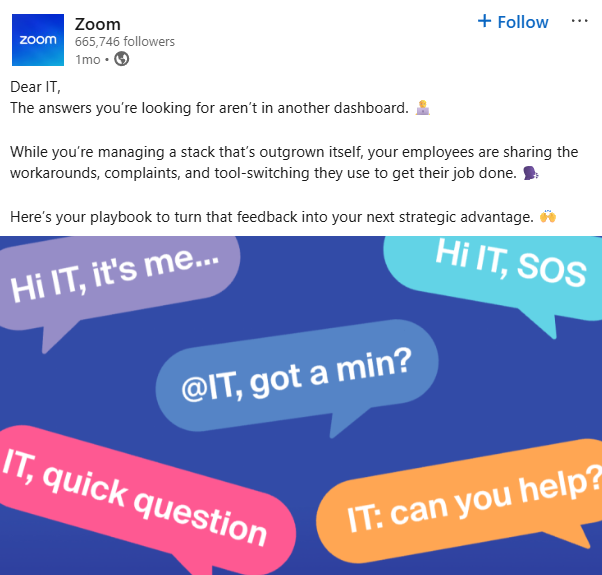
That’s harder to achieve than it sounds. As SaaS companies grow, brand drift often appears across teams and channels. The marketing site says one thing, while the product or support experience says another.

Zoom maintains a consistent identity across customer touchpoints, creating a more familiar and trustworthy experience. For B2B SaaS brands, branding extends beyond logos and design assets. Every customer interaction should reinforce the same experience.
6. Their Tone of Voice Is Professional Without Feeling Corporate
Zoom’s tone is simple, direct, and easy to understand. Whether you’re on the website, reading a customer story, or using the product, the language stays clear and conversational.
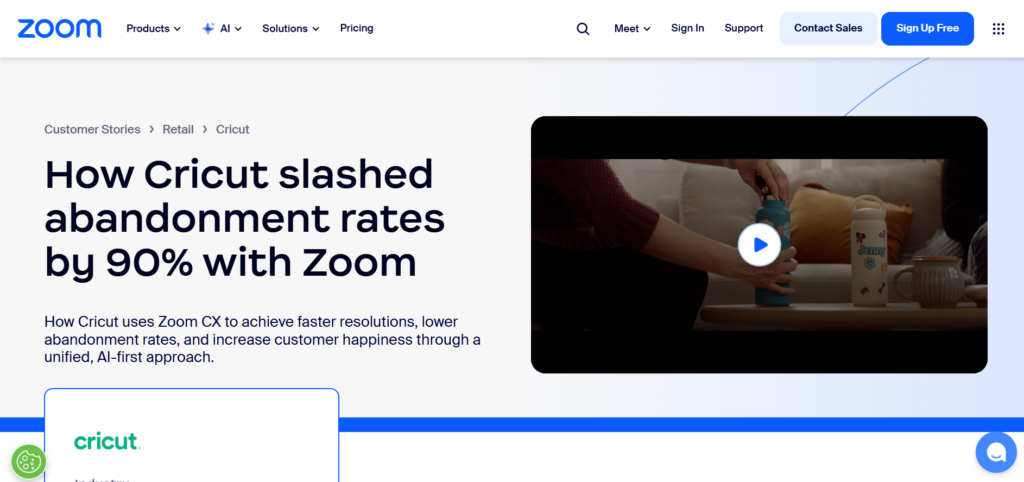
You won’t find the usual B2B buzzwords like “best-in-class,” “robust,” or “enterprise-grade” dominating the copy. Even product actions such as “Start a Meeting,” “Join,” and “Chat” are straightforward and require no explanation.
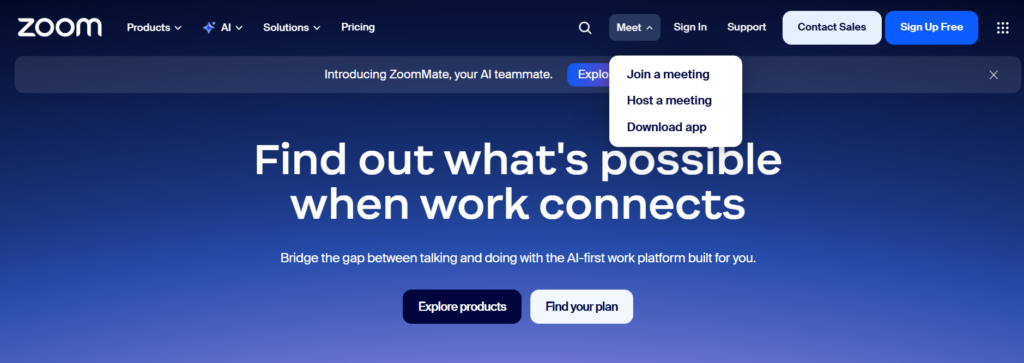
This helps Zoom appeal to both buyers and end users. The brand feels professional without sounding corporate, proving that complex products don’t need complex communication. In many cases, clarity is what builds trust.
7. Zoom’s Brand Scales Across Multiple Audiences
Zoom serves enterprises, SMBs, schools, healthcare organizations, governments, and individual users. That’s a wide range of audiences, yet the brand remains remarkably consistent.
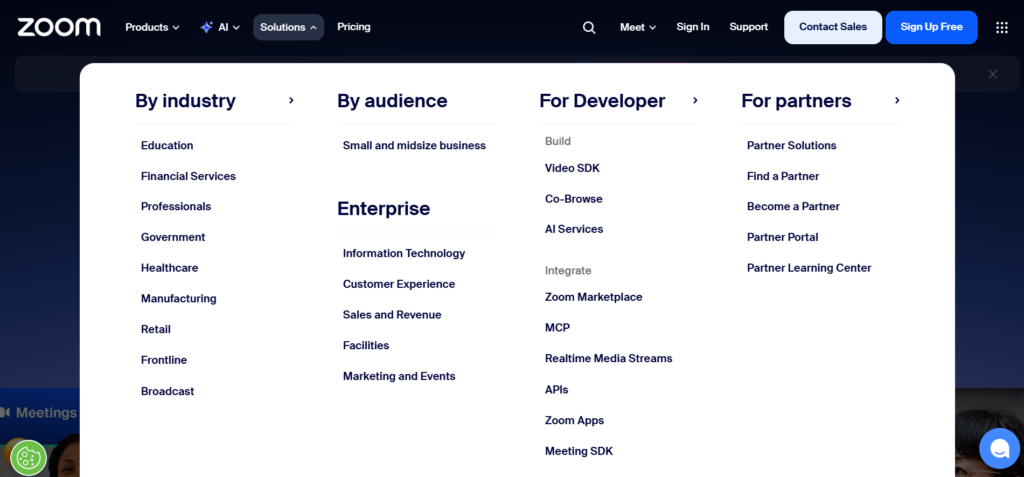
What changes is the messaging. The healthcare pages focus on telehealth and compliance; the education pages emphasize student engagement; and the enterprise pages highlight administration and security. The brand identity, product naming, and core promise remain the same.

This allows Zoom to adapt to different audiences without fragmenting the brand. Rather than creating separate identities for each market, it uses one master brand and tailors the message to the audience’s needs.
8. The Website Reflects Strategic Brand Architecture
A quick look at Zoom’s navigation reveals how the company sees itself. Products are organized into categories like Zoom Workplace, Zoom Business Services, and Zoom AI, while solutions are segmented by industry and business function.
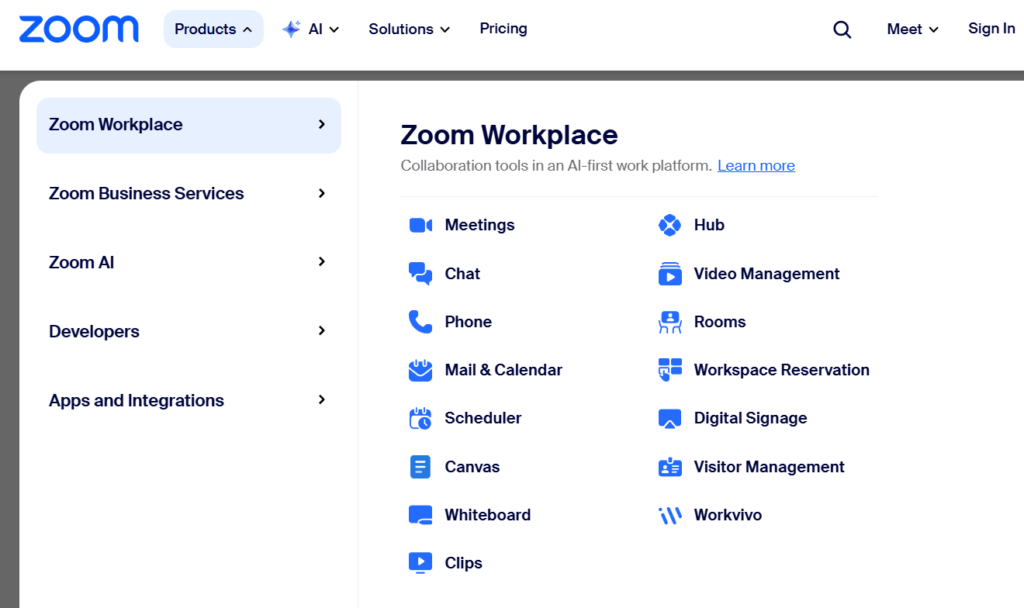
This isn’t just a website design choice. It’s brand architecture made visible. Within a few clicks, visitors understand that Zoom is a platform with multiple products, audiences, and use cases, not just a video meetings tool.
Many SaaS websites present a flat list of features and products, making the business feel fragmented. Zoom’s structure creates clarity, helping buyers understand how the different pieces fit together and where they fit within the ecosystem.
9. Zoom’s Brand Evolution Mirrors Its Business Evolution
Zoom didn’t start as a workplace platform. It started as a video meetings tool. Today, the company positions itself around Zoom Workplace, AI Companion, and a broader suite of communication and productivity products.
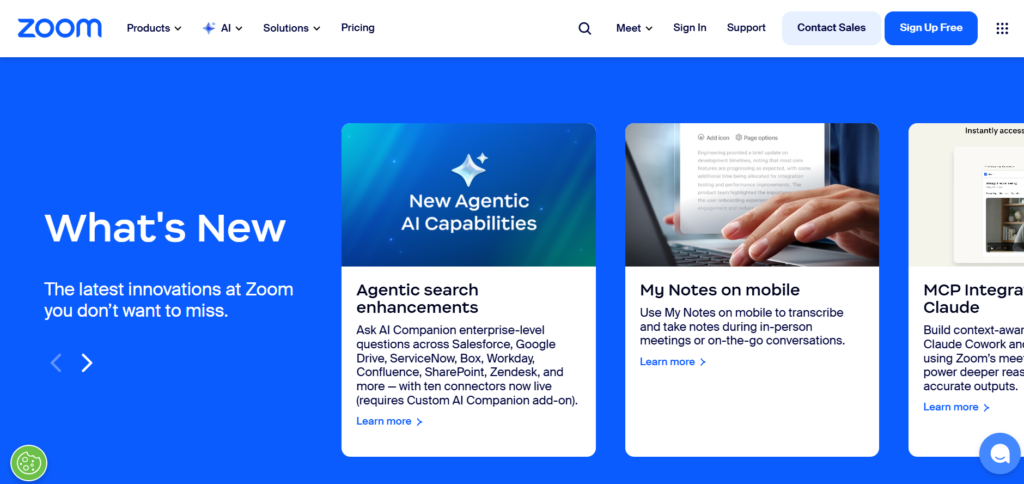
What’s notable is that these shifts feel like a natural evolution rather than a rebrand. The brand was built with enough flexibility to absorb new products and categories without confusing buyers.
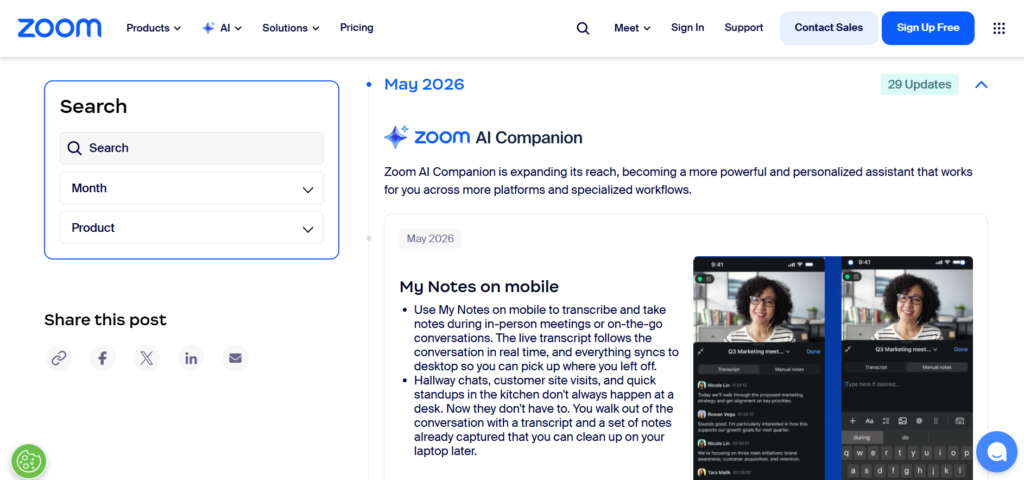
Many SaaS companies outgrow their original positioning and struggle to adapt. Zoom shows the value of evolving the brand alongside the business, ensuring it reflects where the company is headed, not just where it started.
10. Zoom Makes AI Feel Like a Natural Extension of the Brand
Many companies responded to the AI boom by launching standalone AI products. Zoom took a different approach. AI Companion was integrated into existing workflows, helping users with meeting summaries, note-taking, and content creation inside the tools they already use.
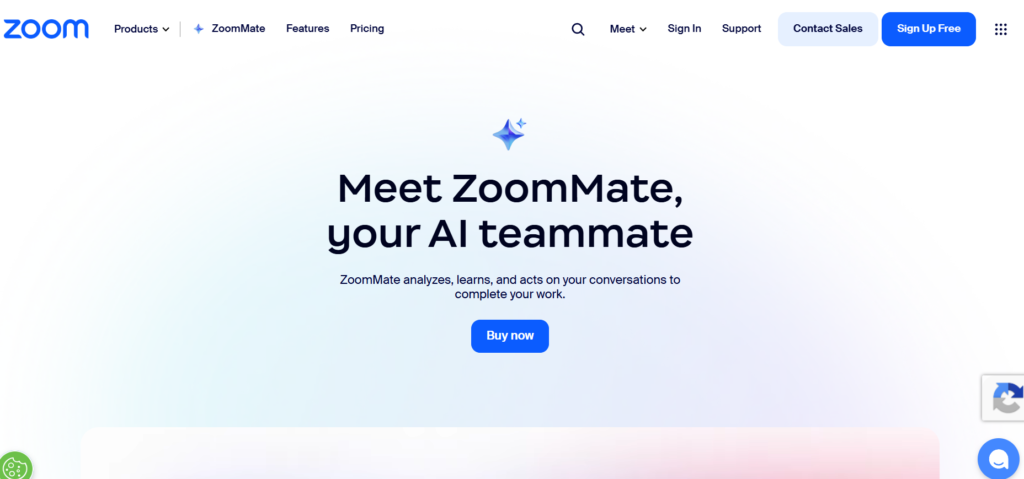
That approach aligns with Zoom’s core brand promise of simplicity. Users don’t need a separate product, interface, or workflow to access AI capabilities. The experience feels like an enhancement rather than a new system to learn.
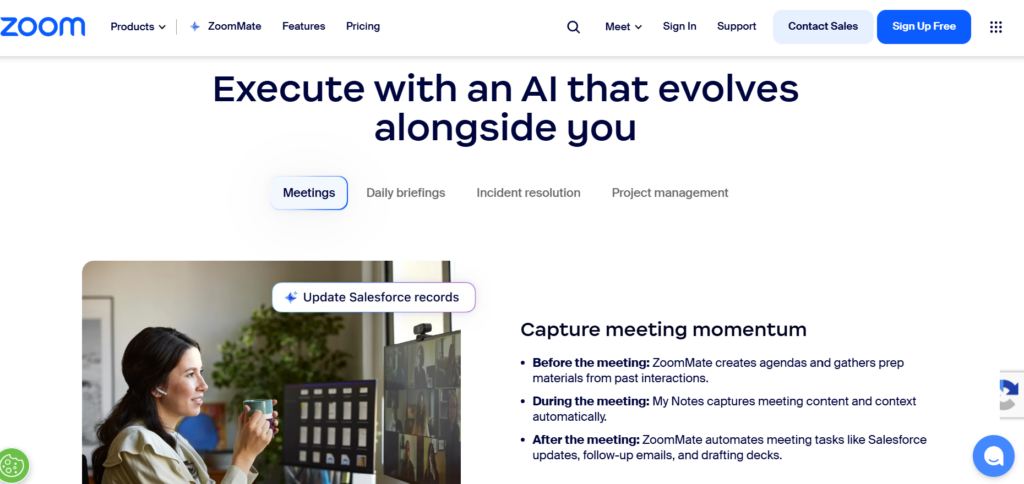
This highlights an important branding principle. New products and innovations should strengthen the brand’s positioning, not pull it in a different direction. In Zoom’s case, AI reinforces the same promise that helped build the brand in the first place.
Key Branding Lessons from Zoom
Here are some key branding lessons from Zoom:
- Own a single, clear brand promise and reinforce it consistently across every product, message, and customer interaction.
- Prioritize recognition over complexity, because buyers are more likely to trust brands that feel familiar and consistent.
- Build a brand architecture that can support future products and categories without requiring a repositioning exercise every few years.
- Focus messaging on the outcomes customers want to achieve rather than the features your software provides.
- Maintain consistency across your website, product, support content, events, and marketing to create a seamless brand experience.
- Use clear, human language that speaks to users and buyers alike instead of relying on jargon or corporate buzzwords.
- Adapt messaging for different audiences while keeping the core brand identity and positioning intact.
- Structure your website in a way that helps buyers understand your products, solutions, and overall business strategy.
- Revisit your positioning as your market evolves so the brand continues to reflect where the business is headed.
- Ensure every new product, feature, or innovation strengthens the existing brand narrative rather than creating confusion.
Final Thoughts
Zoom demonstrates that strong B2B SaaS branding is rarely about being the loudest brand in the category. It’s about creating clarity, consistency, and confidence at every touchpoint.
For SaaS companies looking to build stronger brands, the lesson isn’t to copy Zoom’s visual identity. It’s to emulate the strategic discipline behind it.
If your SaaS brand has scaled faster than its positioning or messaging, that gap is common and fixable. At The Brand Strategy Labs, we help B2B SaaS companies refine positioning and build brands that scale with the business.